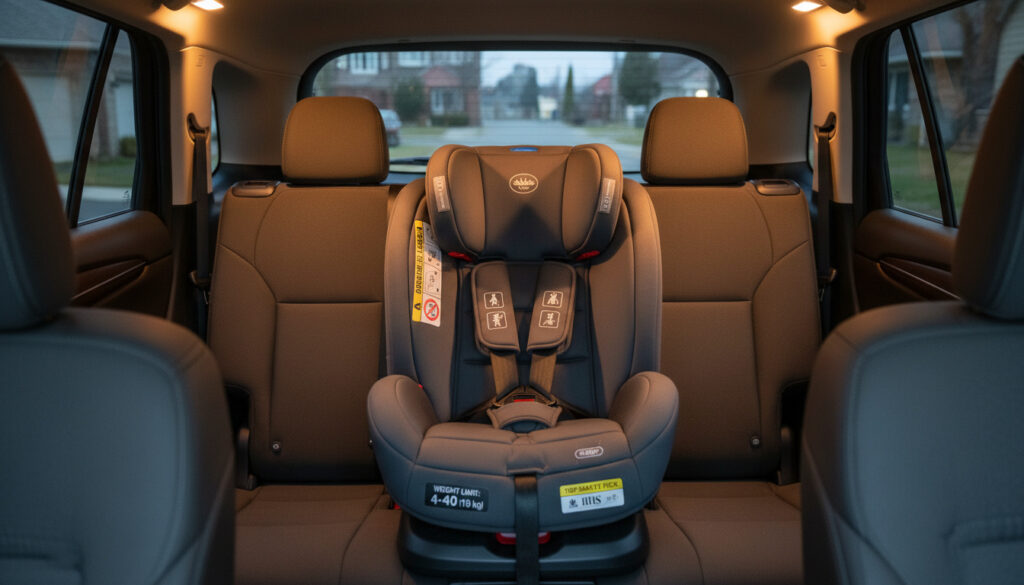
Rear Facing Car Seat – Safety Limits and Top Picks
Rear-facing car seats provide the safest protection for infants and toddlers by supporting the head, neck, and spine during crashes. Both the American Academy of Pediatrics (AAP) and the National Highway Traffic Safety Administration (NHTSA) recommend children remain in this orientation until reaching the manufacturer’s maximum height or weight limit, often extending use to two years or beyond with convertible seats. While SteelSeries Arctis Nova Pro Wireless – Battery ANC Sound Guide covers audio equipment, selecting the correct child restraint requires understanding biomechanics and federal regulations.
Convertible and all-in-one models now accommodate larger toddlers rear-facing, with some supporting children up to 50 pounds. New federal standards effective June 30, 2025, introduce mandatory side-impact testing and adjust minimum weight requirements for forward-facing orientations, further encouraging extended rear-facing use.
How Long Should a Child Stay Rear-Facing?
Superior head, neck, and spinal protection during frontal collisions.
Birth through age 2 and beyond, until maximum seat limits reached.
Typically 40-50 pounds for extended rear-facing convertible models.
Duration depends entirely on the specific seat’s capacity and the child’s growth trajectory. The AAP advises keeping children rear-facing as long as possible, up to the highest weight or height allowed by the car seat manufacturer. Most convertible seats accommodate this positioning for children aged two years and older.
NHTSA mandates that children under one year must use rear-facing seats. The agency recommends maintaining this orientation through ages one to three, or longer, until the child outgrows the seat’s limits. State laws vary significantly; Virginia and Rhode Island, for example, require rear-facing for children under two years or between 20-30 pounds, while other states follow different thresholds. Parents should always follow the stricter standard between state law and manufacturer specifications.
- Extended rear-facing reduces severe injury risk by up to five times compared to forward-facing for young children.
- Convertible seats with 40-50 pound rear-facing limits enable safer longer duration use.
- Children should not transition based on age alone; physical measurements determine readiness.
- Installation errors affect over 70% of car seats, reducing protective capability regardless of orientation.
- 2025 federal regulations increase minimum forward-facing weight to 26.5 pounds, reinforcing extended rear-facing.
- Rear-facing orientation cradles the child, distributing crash forces across the entire back and shell.
| Specification | Details |
|---|---|
| Minimum Age | Newborn |
| Typical Infant-Only Limit | 4-35 lbs, 17-32 inches |
| Convertible Rear-Facing Range | Up to 40-50 lbs (extended models) |
| 2025 Minimum Forward-Facing Weight | 26.5 lbs (previously 22 lbs) |
| Installation Angle | 30-45 degrees recline |
| Head Clearance Rule | Top of head 1 inch below shell top |
| AAP Recommendation | Until max height/weight, often 2+ years |
| NHTSA Requirement | Mandatory rear-facing under age 1 |
| Side Impact Standard (2025) | FMVSS 213a for seats under 40 lbs |
| LATCH Weight Limit | Typically 40-65 lbs (varies by manufacturer) |
Are Rear-Facing Car Seats Safer Than Forward-Facing?
Rear-facing positioning offers superior protection for developing bodies. During frontal collisions—the most common and severe type of vehicle crash—this orientation distributes impact forces across the child’s entire back, neck, and head, cradling the body within the seat shell. Forward-facing configurations, by contrast, restrain the torso while allowing the head to pitch forward violently, creating significant stress on the spinal column.
The Physics of Crash Protection
The fundamental difference lies in force distribution. A rear-facing seat moves with the child, supporting the head and preventing excessive neck extension. In forward-facing seats, the harness stops the shoulders while momentum continues carrying the head forward, generating dangerous shear forces on the neck. This biomechanical reality means rear-facing seats reduce serious injury risk substantially for toddlers whose vertebrae remain partially cartilage.
Research indicates that rear-facing car seats are approximately five times safer for children under one year of age compared to forward-facing alternatives. This protective advantage continues, though gradually diminishing, as children grow through age two and beyond.
Official Position Statements
The AAP maintains that all infants and toddlers should ride rear-facing until reaching the maximum height or weight permitted by their car seat. This guidance replaced earlier age-based minimums to emphasize physical capacity over chronological age. NHTSA data supports this, showing dramatically lower injury rates among properly restrained rear-facing children in severe collisions.
What Are the Weight and Height Limits for Rear-Facing Car Seats?
Limits vary significantly by seat category and manufacturer. Infant-only seats typically accommodate children from 4-35 pounds and up to 32 inches, requiring a transition once the head reaches one inch from the shell top. Convertible seats offer extended rear-facing capacity, with several models supporting children up to 50 pounds. All-in-one seats mirror convertible limits for the rear-facing phase before transitioning to booster mode.
New Federal Regulations Effective 2025
Beginning June 30, 2025, all new car seats manufactured for children under 40 pounds must comply with FMVSS 213a side-impact testing standards. These regulations simulate T-bone collisions, requiring larger headrests and energy-absorbing materials. Consumers should look for “Side-Impact Tested to FMVSS 213a” labels when purchasing.
The updated standards increase minimum forward-facing weight requirements to 26.5 pounds and booster seat thresholds to 40 pounds and 43 inches tall. Some manufacturers have adjusted existing models accordingly; the Nuna REVV now carries a 30-pound rear-facing limit, reduced from 40 pounds, while the Nuna EXEC forward-facing mode begins at 30 pounds.
Manufacturer Variations
Graco offers extended rear-facing options supporting children up to 50 pounds, while Evenflo’s Gold SensorSafe SecureMax accommodates 4-35 pounds in the rear-facing configuration. Parents must consult specific model labels and manuals, as exceeding these limits compromises safety regardless of child age.
Never use a forward-facing car seat in a rear-facing orientation. Seats are engineered and tested for specific directional forces; reversing orientation voids safety certifications and eliminates protection. Always verify the seat’s designated rear-facing maximums on the manufacturer label before installation.
What Are the Best Rear-Facing Car Seats and How Do You Install Them?
Selecting optimal equipment requires balancing extended rear-facing capacity with FMVSS 213a compliance and straightforward installation. Top-rated models for 2025 include the Graco Extend2Fit, offering 50-pound rear-facing limits and integrated belt lock-offs; the Chicco NextFit, known for rigid LATCH stability; and the Nuna EXEC all-in-one system. For infants specifically, the Evenflo Gold SensorSafe SecureMax provides sensor-based monitoring within standard 4-35 pound limits.
When shopping, prioritize seats displaying updated side-impact testing labels and verify that advertised weight limits apply specifically to rear-facing orientation, not just overall harness capacity. While Cream Tea Near Me – Best Devon and Cornwall Guide explores regional cuisine, car seat selection demands technical precision rather than personal preference.
Installation Methods
Infant-only seats typically utilize a base that remains permanently installed while the carrier detaches. This system reduces installation errors during daily use. Convertible seats install directly using either the vehicle’s LATCH system (Lower Anchors and Tethers for Children) or the seat belt.
Rigid LATCH connectors provide superior stability compared to belt-based installation. When using LATCH, observe weight limits—typically 40-65 pounds including the seat—after which point the vehicle seat belt must be used with the seat’s built-in lock-off features. Regardless of method, rear-facing installation requires a 30-45 degree recline angle, verified with the seat’s built-in indicator, and tightness allowing less than one inch of movement at the belt path.
How Have Rear-Facing Safety Standards Evolved?
-
Federal Motor Vehicle Safety Standard 213 establishes first mandatory requirements for child restraint systems, focusing primarily on frontal crash protection.
-
American Academy of Pediatrics releases landmark recommendation advising parents to keep children rear-facing until at least age 2, shifting from previous one-year guidance.
-
AAP updates policy statement to remove specific age maximums, instead recommending rear-facing use “as long as possible” until seat limits are reached.
-
FMVSS 213a mandates side-impact testing for all new car seats under 40 pounds, representing the most significant regulatory expansion in decades.
What Do Experts Know for Certain About Rear-Facing Car Seats?
| Established Facts | Variable or Uncertain Information |
|---|---|
| Rear-facing orientation reduces severe injury risk compared to forward-facing for children under four. | Exact calendar age for safe transition varies by individual child growth rates and specific seat dimensions. |
| 2025 federal standards require side-impact testing (FMVSS 213a) for all new seats under 40 pounds. | Specific rear-facing weight limits differ between manufacturers (e.g., 30 lbs vs. 50 lbs for different models). |
| Children should remain rear-facing until reaching the maximum height or weight limit of their specific seat model. | State legal requirements vary; some jurisdictions mandate rear-facing until age two while others use weight-based thresholds. |
| Proper installation at the correct recline angle (30-45 degrees) is essential for safety. | The precise degree of increased safety for children over age three in rear-facing versus forward-facing positions requires further longitudinal study. |
Why Does Rear-Facing Positioning Provide Superior Protection?
The protective advantage stems from biomechanics. During frontal collisions, the most common severe crash type, a rear-facing seat cradles the child’s entire body, allowing the shell to absorb and distribute deceleration forces across the back and shoulders. This integration prevents the whiplash motion that causes spinal cord injuries in forward-facing passengers.
Young children possess disproportionately large heads relative to body mass and weak neck musculature. Forward-facing harnesses effectively decapitate the body in severe crashes, stopping the torso while the head continues forward. Rear-facing seats eliminate this differential movement, supporting the head in line with the spine throughout the collision sequence.
Federal data confirms these mechanisms translate to measurable safety outcomes. Children properly restrained in rear-facing seats sustain fewer head, neck, and spinal injuries than those facing forward, regardless of whether the collision involves frontal, side, or rear impacts.
What Do Leading Safety Organizations Recommend?
“Keep rear-facing until at least age 2.”
American Academy of Pediatrics
“Rear-facing car seats are five times safer for children under one year old.”
National Highway Traffic Safety Administration
What Should Parents Do Next?
Verify your child’s current measurements against your car seat’s rear-facing maximums rather than relying on age alone. Register your seat with the manufacturer to receive recall notifications, and consider scheduling a professional installation inspection with a certified Child Passenger Safety Technician. As regulations and product standards continue evolving through 2025 and beyond, maintaining awareness of FMVSS 213a compliance and extended rear-facing capacity will ensure your child receives maximum protection during every journey.
Frequently Asked Questions
Can you use a forward-facing car seat rear-facing?
No. Car seats are engineered and tested for specific directional forces. Using a forward-facing seat rear-facing eliminates safety certifications and provides no protection.
What are the rear-facing car seat harness guidelines?
Harness straps must sit at or below the child’s shoulders. The chest clip should rest at armpit level, and the harness should be snug enough that no extra material can be pinched at the shoulders.
What if my child’s feet touch the vehicle seat while rear-facing?
This is common and safe. Children naturally bend their legs or sit cross-legged. Leg extension injuries are extremely rare compared to head and spinal injuries prevented by rear-facing orientation.
Do rear-facing car seats expire?
Yes. Most car seats expire six years from the manufacture date, though some models offer extended ten-year lifespans. Expiration dates account for plastic degradation and evolving safety standards.
Is it safe to install a rear-facing seat in the front passenger seat?
Only if the vehicle has no front airbag or the airbag can be deactivated. Active front airbags can cause fatal injuries to rear-facing children. The back seat is always safest.
Can my child wear a winter coat in a rear-facing car seat?
No. Bulky coats compress during crashes, creating slack in the harness. Dress children in thin layers and use blankets over the harness after buckling.
How tight should the installation be?
The seat should not move more than one inch side-to-side or front-to-back when tested at the belt path. If using LATCH, check weight limits in your vehicle and seat manuals.
More related posts
 Best 0 Interest Credit Cards Ireland: Top 0% APR Picks
 Guardians of the Galaxy 3 Cast: Full List of Actors
 Too Hot to Handle – Rules, Penalties and Winners Guide
 James Franco’s Career Downfall: Allegations and Fallout
 How Much Protein Should I Eat – Calculator and Needs Guide
 Bone Profile Blood Test: What It Tests, Results & Normal Range
 Cobra Kai Season 6 Part 3: Release Date and Final Details
 Why Does My Cat Lick Me – Reasons and Meanings Explained
