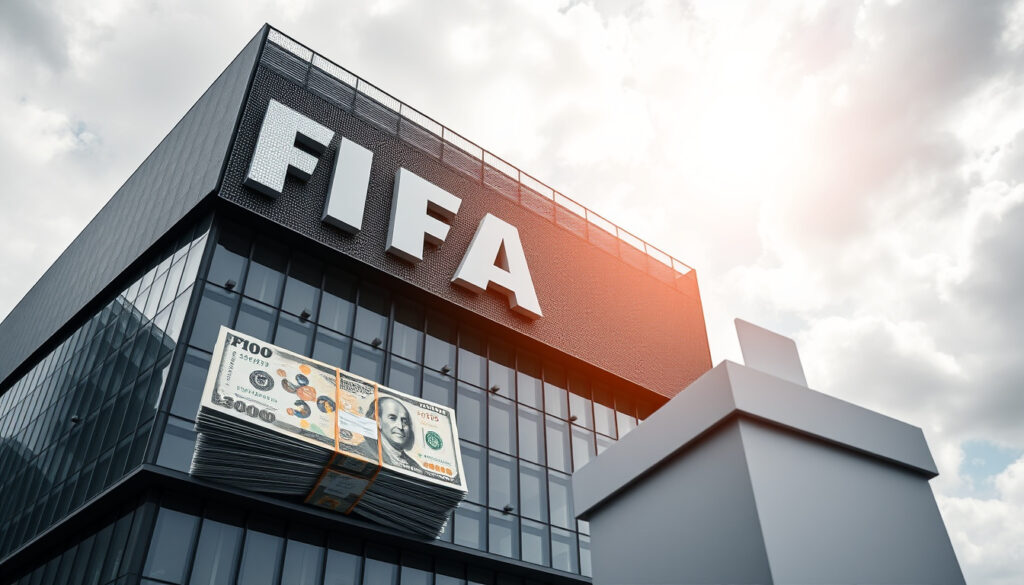
Gianni Infantino: Salary, Sell-Off and Re-election
Few jobs in football carry more power — or more scrutiny — than the FIFA presidency. Gianni Infantino has held the job since 2016 (ESPN), steered FIFA through a World Cup sell-off controversy that ended in retreat, and now faces open calls to step aside from European federations.
Base salary: 2.6 million CHF ·
Bonus: 2.2 million CHF ·
Total pay package: about $6 million ·
FIFA president: since 2016 ·
Previous role: UEFA general secretary
Quick snapshot
- Infantino was re-elected unopposed in 2019 and 2023 (BBC Sport).
- FIFA’s 2024 disclosure showed a gross salary of 2.6 million Swiss francs, a 1.65 million bonus and 24,000 euros in allowances (Le Monde).
- His total pay package was reported at about $6 million (Associated Press).
- Infantino’s exact net worth has never been publicly confirmed.
- Whether UEFA’s legal opposition can force a formal removal process.
- Whether any candidate will challenge him at the 2027 election.
- Whether the sell-off plan is dead for good or merely shelved until after the vote.
- FIFA statutes allow Infantino one more four-year term after 2023 (PBS NewsHour).
- He has said he plans to seek a fourth and final term in 2027 (CBC Sports).
- The 2027 FIFA Congress election is the next real test of his mandate.
- No formal removal motion has been initiated despite public calls for resignation.
Profile at a glance
Six rows, one pattern: a Swiss-Italian lawyer who traded UEFA’s back office for FIFA’s presidency — and turned the job into a one-man institution.
| Field | Value |
|---|---|
| Full name | Gianni Infantino |
| Title | President of FIFA |
| Nationality | Swiss-Italian |
| Base salary | 2.6 million Swiss francs (Associated Press) |
| Bonus | 2.2 million Swiss francs (2025 report) (Associated Press) |
| Previous role | UEFA General Secretary |
The pattern: the only numbers in this table that have moved are the pay rows — and they have moved in one direction only.
Can FIFA fire Gianni Infantino?
What are the legal grounds for removing a FIFA president?
- FIFA’s statutes, not public opinion, define the limits of the president’s tenure — and those statutes currently point to 2027 as the natural endpoint.
- No removal motion or disciplinary action has been formally opened against Infantino.
- The resignation campaign has remained political rather than procedural.
The short answer is: not through anything in the public record. FIFA is not a public company and its president is not a chief executive who can be dismissed by a board; the chain of accountability runs to a Congress of more than 200 member associations, and that Congress has started no removal step. The same electorate has given Infantino two unopposed victories.
A resignation campaign needs a mechanism. So far, the mechanism doesn’t exist: no formal removal motion has been filed, and Infantino’s response to the pressure has been to announce that he will run again — the opposite of stepping aside.
What is the current status of resignation calls?
- UEFA-aligned federations have moved from protest letters to legal action.
- The 2027 presidential election has become the real battleground; the resignation calls are, for now, a pressure campaign rather than a legal one.
What this means: the legal grounds to remove Infantino before 2027 are untested and unactivated. The election is the only removal mechanism with a date attached to it.
Did Gianni Infantino try to sell FIFA?
What was the World Cup sell-off plan?
- Infantino championed a proposal to sell a 21% stake in FIFA’s commercial and ticketing business to a private equity firm (BBC Sport).
- It was framed internally as a revenue-growth strategy, not as a sale of the World Cup itself.
“Sell FIFA” is shorthand — no one was literally selling the tournament. But the plan would have handed outside investors a share of the business that controls the World Cup, and that was enough to set off a governance crisis.
How did UEFA and FIFA vice-presidents react?
- European federations signed a joint letter accusing Infantino of “deception” over the proposal.
- Figures inside FIFA joined the opposition, and the backlash was “seismic” enough that the plan was abandoned (PBS NewsHour).
For European federations, the alarm was never really about the percentage. It was about precedent: if FIFA could sell a fifth of its commercial engine to a private equity firm, nothing in the game’s income would be off-limits next time.
UEFA’s opposition is no longer just political: legal proceedings are now part of the conflict, and they will outlast the sell-off story itself.
The trade-off: the sell-off failed, but the episode gave Infantino’s opponents something they lacked before — proof that organised pressure can force him to back down. That lesson will shape every FIFA commercial negotiation from here to the 2027 election.
How much is Gianni Infantino paid at FIFA?
Does his compensation include bonuses?
Base salary: 2.6M CHF ·
Bonus: 1.65M CHF (2024) → 2.2M CHF (2025 report) ·
Allowances: 24,000 euros
- Yes — FIFA’s 2024 disclosure, set out in the snapshot above, lists a gross salary of 2.6 million Swiss francs, a bonus of 1.65 million and 24,000 euros in allowances.
- The 2025 report kept the base at 2.6 million and raised the bonus to 2.2 million (figures in the profile table above).
How does his salary compare to previous presidents?
- Le Monde’s analysis found his compensation has roughly quadrupled over a decade as FIFA president (Le Monde).
- ESPN’s analysis put his total 2024 compensation above $4.67 million (ESPN).
The headline base salary flatters the comparison. Bonuses and allowances push the real number beyond the base in every disclosure, and direct comparisons with earlier presidents are complicated by rules that changed after the 2015 crisis.
The pattern: every year in office has made Infantino more expensive — and the raises keep arriving while the political pressure accumulates.
How is Gianni Infantino related to Messi?
Who is Gianni Infantino’s favorite player?
- Infantino has publicly praised Messi on several occasions, presenting himself as a fan of the sport’s biggest star.
- The link is institutional: as FIFA president he presides over the awards Messi has dominated, and he was in office when Messi’s Argentina won the 2022 World Cup (ESPN).
Who is Messi’s football idol?
- Messi has repeatedly named Diego Maradona as his football idol.
- Maradona, in turn, described Messi as his natural successor — the highest endorsement in Argentine football.
That is the real shape of the “Infantino-Messi relationship”: a relationship of proximity, not friendship. Infantino hands out the trophies; Messi takes them home. But Messi’s football heart belongs to Maradona, and no trophy ceremony can change that. Why this matters: every photo of Infantino and Messi gives FIFA’s president a share of football’s most valuable halo — and, with the 2027 election approaching, he needs that halo more than ever.
Was Gianni Infantino a footballer?
Which club does Gianni Infantino support?
- Infantino never played professional football; his route to the top ran through law school and sports administration, not the pitch.
- He trained as a lawyer, rose through UEFA’s ranks, and eventually took the FIFA presidency.
- His club loyalty, by his own telling, belongs to Inter Milan — the team he supported as a child.
The detail that says the most is the absence: no playing career, no coaching badges, no club ownership. Infantino is a governance specialist who climbed through every layer of football administration — which is why his critics call him a bureaucrat in the game’s most powerful job, and his defenders say a bureaucrat was exactly what FIFA needed after 2015.
The man European football loves to criticise is, by background, a governance fixer — and FIFA’s member associations keep re-electing him, unopposed, every four years.
The pattern: being a non-footballer has never held Infantino back. It just gives his opponents a way to frame the fight: not about what he does with a ball, but about what he does with FIFA’s money.
Timeline signal
- February 2016: Infantino is elected FIFA president after Sepp Blatter’s resignation (Le Monde).
- August 2026: the equity-sale plan triggers a “seismic” backlash and FIFA abandons it (PBS NewsHour).
- September 2026: Infantino confirms he will seek a fourth and final term in 2027 (CBC Sports).
The through-line: every inflection point in Infantino’s presidency has been followed by a fight — and every fight has ended with him still in office.
Confirmed facts vs. what’s unclear
What the record shows
- Infantino has been FIFA president since 2016 and has announced plans to seek a fourth term in 2027 (ESPN, CBC Sports).
- FIFA scrapped the World Cup equity-sale plan after intense opposition from inside the game (PBS NewsHour).
- His reported total pay package reached about $6 million (Associated Press).
What remains open
- Infantino’s exact net worth is not publicly documented.
- Whether UEFA’s legal opposition can force a removal process.
- Whether a credible challenger will emerge before the 2027 election.
- Whether the sell-off plan is truly dead or waiting for a calmer political moment.
Why the split matters: the confirmed facts define the crisis; the unclear items decide how it ends. Until a challenger appears, the uncertainty favours the incumbent.
Defenders and critics
European federations signed a joint letter accusing Infantino of “deception” over the plan to sell a stake in the World Cup’s commercial rights. Their central charge: that he pushed the sale forward while presenting it as routine financial management.
— UEFA-aligned national associations, letter covered by BBC Sport
FIFA’s defence of Infantino’s re-election bid rests on one argument: the mandate comes from the member associations, and the 2027 election is the only forum that can change it.
— FIFA spokesperson, as cited by CBC Sports
The takeaway
Infantino has spent a decade turning FIFA’s presidency into a one-man institution — and is now defending it against the most organised revolt European football has mounted in a generation. The sell-off failed, but he did not; the resignation calls are loud, but they have no procedural teeth. For the European federations that want him gone, the choice is clear: rally around a credible candidate before the 2027 Congress, or prepare for a fourth Infantino term and a FIFA whose commercial ambitions have been postponed, not cancelled.
Frequently asked questions
What is the World Cup sell-off plan?
It was a proposal to sell a 21% stake in FIFA’s commercial and ticketing business to a private equity firm. FIFA abandoned it after a wave of opposition from European federations and figures inside the organisation.
Why is Gianni Infantino facing calls to resign?
The sell-off plan triggered a joint letter from European federations accusing him of “deception,” and the controversy reignited criticism of his leadership and his decision to seek another term.
Who is challenging Gianni Infantino for the FIFA presidency?
No formal challenger has emerged so far. The 2027 FIFA Congress election is the deadline for any candidacy to take shape.
What is UEFA’s position on Gianni Infantino?
UEFA-aligned federations have opposed him over the sell-off and have moved the conflict into legal channels, with court filings reported by CBC Sports.
How does the FIFA president’s salary compare to other sports executives?
Infantino’s total package is roughly $6 million per year — far below the top earners in American team sports, but substantial for a federation president and sharply higher than his own early years in the job.
Is there a way to remove Infantino before 2027?
No formal removal mechanism is visible in the public record. FIFA’s statutes currently allow Infantino one more four-year term after 2023, and any earlier removal would require a political route through the member associations.
Related reading
More related posts
 Goldie Hawn Health: Facts vs Rumors
 Roberto Martinez: Career, Teams, and Managerial Record
 David Wenham: Faramir to Daisy – Actor Biography & Facts
 Arti Shah: Little Person Actress, West End Paddington Star
 What Does 6 7 Mean Slang – Chicago Origins and Meme Evolution
 Ragnar Lothbrok: Real Viking History vs. TV Fiction Explained
 Marks & Spencer Sparks Offers, Discounts & £13 Rule Explained
