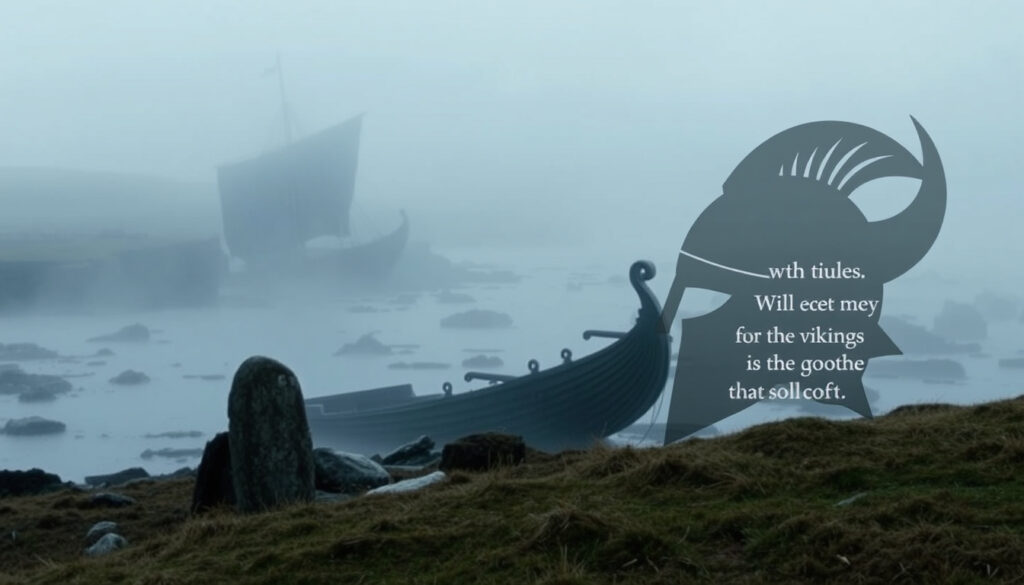
Ragnar Lothbrok: Real Viking History vs. TV Fiction Explained
Few historical figures blur the line between documented fact and medieval legend quite like Ragnar Lothbrok. If you have watched the History Channel’s Vikings series, you have seen a farmer-turned-king who outwits enemies and plots his own death in a snake pit.
Active period: 9th century AD ·
Known from: Old Norse poetry and medieval sagas ·
Reputed title: King of Denmark and Sweden ·
Confirmed historical sons: 4 (Björn, Ivar, Sigurd, Ubbe) ·
Primary source: Tale of Ragnar’s Sons (13th century) ·
TV portrayal: Travis Fimmel in Vikings (History Channel)
Quick snapshot
- Ragnar appears in 13th-century Icelandic sagas (Encyclopaedia Britannica)
- Bjorn Ironside is a historically attested Viking leader who raided the Mediterranean (World History Encyclopedia)
- The Great Heathen Army invaded England in 865 AD, led by Ivar the Boneless (History Extra)
- Whether Ragnar was a single historical person or a composite of several leaders (Encyclopaedia Britannica)
- The exact number and names of his historical wives (History Extra)
- If any living person can prove direct descent from Ragnar Lothbrok (History Hit)
- c. 845 AD — Legendary siege of Paris attributed to Ragnar (History Extra)
- 865 AD — Great Heathen Army invades England, led by his sons (Encyclopaedia Britannica)
- 13th century — Ragnars saga loðbrókar written in Iceland (World History Encyclopedia)
- Ongoing scholarly debate on whether Ragnar is a composite figure (Universität Münster medieval research)
- New archaeological findings may clarify the historical basis for the Great Heathen Army’s leaders (Historic UK)
- TV series continue to adapt the legend, further blurring the line for audiences (Battlemerchant analysis)
Six key facts, one pattern: the medieval sources consistently name Ragnar as a great Viking leader, but they were written centuries after the events they describe.
| Fact | Value |
|---|---|
| Full name in Old Norse | Ragnarr Loðbrók |
| Meaning of ‘Lodbrok’ | Hairy-breeches or leather-breeches |
| Earliest written source | Ragnars saga loðbrókar (13th century) |
| Historians’ consensus | Semi-legendary; possibly a composite figure |
| TV series premiere | History Channel, 2013 |
| TV series departure | Season 4, episode 15, 2016 |
Was Ragnar Lothbrok a Real Viking?
Historical evidence in medieval sagas
The central challenge with Ragnar Lothbrok is that Encyclopaedia Britannica describes him as a figure whose “historical existence is uncertain.” The main narratives come from the 13th-century Icelandic Ragnars saga loðbrókar and the Tale of Ragnar’s Sons, both written roughly 400 years after the Viking Age. Saxo Grammaticus also included Ragnar in Gesta Danorum, composed between 1188 and 1208, according to History Extra.
- No contemporary written record from the 9th century mentions Ragnar by name (World History Encyclopedia).
- The Anglo-Saxon Chronicle records a Viking leader named Reginherus who attacked Paris in 845, but does not connect him to the saga figure (Historic UK).
- Scholars at the Universität Münster describe the saga tradition as “blurring history and myth.”
Ragnar Lothbrok is best understood as a semi-legendary figure — likely a composite of several historical Viking leaders whose exploits were merged into a single dramatic narrative by later medieval writers.
Differences between the legend and the TV character
The History Channel’s Vikings series, which premiered in 2013 with Travis Fimmel as Ragnar, is a dramatised adaptation rather than a historical documentary. The show’s creator, Michael Hirst, has acknowledged taking creative liberties. According to Express, the TV character is “an amalgamation of multiple historical and legendary figures.” In the series, Ragnar rises from a farmer to a king, has a brother named Rollo, and orchestrates his own death. None of these plotlines have direct historical corroboration.
The implication: the TV series is a compelling story built on a legendary framework, not a biographical account. Viewers who want the historical record should look to the sagas — and read them with a critical eye.
How Many Wives Did Ragnar Lothbrok Have?
Historically recorded wives in the sagas
According to the medieval sources, Ragnar’s marital history is tangled. The saga tradition names three women: Lagertha, a legendary shieldmaiden; Thora Borgarhjort, a noblewoman; and Aslaug (also known as Kraka), who is said to be the daughter of the legendary hero Sigurd. History Extra notes that Ragnar is “associated in later sources with marriages to Thora and Aslaug,” while History Hit confirms that a “later saga tradition also connects Ragnar with Lagertha.” The story of his first marriage to Thora includes a monster-slaying episode, according to Vikingr.org.
- Lagertha — a shieldmaiden whose story appears in Saxo’s Gesta Danorum (History Hit)
- Thora Borgarhjort — a noblewoman who reportedly required Ragnar to slay a giant serpent to win her hand (Vikingr.org)
- Aslaug (Kraka) — a wise woman who became the mother of several of Ragnar’s famous sons (History Extra)
Fictional wives in the TV series
The Vikings TV series portrays Lagertha as Ragnar’s first wife and Aslaug as his second, with Lagertha remaining a central character long after their marriage ends. This is a creative choice: the sagas do not provide a clear chronological sequence of marriages, and Lagertha’s role in Ragnar’s life is far less developed in the medieval sources. The show also introduces additional romantic entanglements that have no basis in the Britannica record of the legend.
The catch: the historical Ragnar’s marital history is so poorly documented that even the number of wives is debated. The sagas themselves vary in their accounts.
Which Son of Ragnar Lothbrok Was Most Famous?
Bjorn Ironside and his historical raids
Bjorn Ironside is the most historically attested of Ragnar’s sons. World History Encyclopedia notes that Bjorn was a Viking leader who raided the Mediterranean, reaching as far as Italy and France. Frankish chronicles record his activities, giving him a stronger documentary footprint than his brothers. Later tradition holds that he became king of Sweden.
Ivar the Boneless and the Great Heathen Army
Ivar the Boneless is famous for leading the Great Heathen Army that invaded England in 865 AD. Encyclopaedia Britannica confirms that the invasion is a historical event, and Ivar is named in the Anglo-Saxon Chronicle as a leader of the Viking forces. The invasion resulted in the conquest of several Anglo-Saxon kingdoms.
Other sons: Sigurd Snake-in-the-Eye and Ubbe
The sagas describe multiple sons, but only four — Bjorn, Ivar, Sigurd, and Ubbe — have clear historical corroboration, according to History Extra. Sigurd Snake-in-the-Eye is said to have ruled parts of Denmark, while Ubbe (or Ubba) appears in some accounts of the Great Heathen Army. The Tale of Ragnar’s Sons (Þáttr af Ragnarssonum) is the primary source for this genealogical tradition, as noted by Britannica.
While Bjorn and Ivar are historically grounded as Viking leaders, their connection to Ragnar as his sons rests entirely on the saga tradition. There is no contemporary evidence that they were brothers or that they shared a father named Ragnar.
The pattern: historical corroboration exists for the sons’ activities, but the father-son link depends entirely on later medieval storytelling.
Why Was Ragnar Lothbrok Removed From Vikings and Did He Plot His Own Death?
Plot reasons for Ragnar’s departure from the TV series
In the Vikings TV series, Ragnar’s death was a deliberate narrative decision by show creator Michael Hirst to shift focus to the next generation. According to the series storyline, Ragnar arranges his own capture and execution by King Aelle of Northumbria as a strategic move — his death becomes a rallying cry for his sons to invade England. Travis Fimmel’s final episode as Ragnar aired in season 4, episode 15, titled “All His Angels,” in 2016.
Historical accounts of Ragnar’s death
The medieval sagas describe Ragnar’s death as being thrown into a pit of snakes by King Aelle of Northumbria. Encyclopaedia Britannica confirms that this is “part of later saga tradition” and not a contemporary account. The Anglo-Saxon Chronicle does not record any such event. The snake-pit story became a central element of the Ragnar legend and was popularised in the TV series, but its historical basis is extremely weak.
What this means: the TV version of Ragnar’s death is a dramatisation of a legendary episode that itself has no corroboration from 9th-century sources. The real history of how any Viking leader named Ragnar met his end is simply unknown.
Was Rollo a Real Viking?
Historical Rollo’s origins and achievements
Rollo (also known as Hrolf) was a real historical figure. History Extra confirms that Rollo was a Viking leader who founded the Duchy of Normandy in 911 AD after receiving lands from the Frankish king Charles the Simple. His descendant, William the Conqueror, became King of England in 1066, making Rollo a direct ancestor of the English royal line.
Rollo’s relationship with Ragnar in the TV series vs. history
There is no historical evidence that Rollo was Ragnar Lothbrok’s brother. This is a fictional element of the Vikings TV series. The show portrays Rollo as Ragnar’s older brother who eventually betrays him and becomes a Frankish duke. In reality, Rollo lived about a century after the supposed lifetime of Ragnar, and no medieval source connects the two men. Encyclopaedia Britannica makes no mention of any relationship between Ragnar and Rollo.
The pattern: the TV series merged two separate historical figures into a single family drama. Rollo’s story is historically significant on its own — he is a real founder of a dynasty — but his connection to Ragnar is pure invention.
Does Ragnar Lothbrok’s Bloodline Still Exist?
Claims of modern descendants
Several European royal families have claimed descent from Ragnar Lothbrok through his sons, particularly Bjorn Ironside and Ivar the Boneless. These claims appear in medieval genealogies that were compiled centuries after the Viking Age. History Hit notes that many of Ragnar’s adventures are “considered mythical,” and the genealogies built on them are likewise unreliable.
Genetic and genealogical limitations
No direct genetic link to Ragnar Lothbrok can be proven. Because the figure is semi-legendary and no contemporary physical evidence exists, any claim of descent is based on unverifiable medieval genealogies. Encyclopaedia Britannica states that Ragnar’s “historical existence is uncertain,” which means that any bloodline claim is inherently speculative. The House of Normandy and subsequent English monarchies have claimed lineage through Rollo, but as noted, Rollo was not related to Ragnar in any historically documented way.
Why this matters: the question of Ragnar’s bloodline is a modern curiosity driven by the TV series’ popularity. The honest answer is that we simply do not know — and likely never will.
Timeline signal
- 9th century: Historical Viking raids attributed to Ragnar Lothbrok and his sons (World History Encyclopedia)
- c. 845 AD: Legendary siege of Paris led by Ragnar (History Extra)
- 865 AD: Great Heathen Army invades England, led by Ivar the Boneless and other sons (Encyclopaedia Britannica)
- c. 13th century: Ragnars saga loðbrókar and Tale of Ragnar’s Sons written in Iceland (World History Encyclopedia)
- 2013: Premiere of Vikings on History Channel, with Travis Fimmel as Ragnar (Express)
- 2016: Ragnar’s death in season 4 of Vikings; actor Travis Fimmel departs the series (Battlemerchant analysis)
Confirmed facts vs. what’s unclear
Confirmed facts
- Ragnar Lothbrok appears in medieval Norse sagas written in the 13th century (Encyclopaedia Britannica)
- The Great Heathen Army invaded England in 865 AD and was led by Ivar the Boneless, a son of Ragnar in legend (History Extra)
- Bjorn Ironside is a historically attested Viking leader who raided the Mediterranean (World History Encyclopedia)
- Rollo founded the Duchy of Normandy in 911 AD and is a historical figure, unrelated to Ragnar in the historical record (History Extra)
What’s unclear
- Whether Ragnar was a single historical person or a composite of several Viking leaders (Encyclopaedia Britannica)
- The exact number and names of Ragnar’s historical wives (History Extra)
- Whether Ragnar was actually executed in a snake pit (Encyclopaedia Britannica)
- If any living person can prove direct descent from Ragnar Lothbrok (History Hit)
Expert perspectives
“Ragnar Lothbrok is a figure from Norse legend who is best known from medieval Scandinavian literary sources rather than from contemporary biographical evidence.”
World History Encyclopedia
“The real Ragnar Lothbrok was a semi-legendary Viking king who is said to have been the scourge of England and France.”
“Ragnar Lothbrok, Danish king and Viking warrior who flourished in the 9th century, is best known from medieval sagas and later literary works.”
Encyclopaedia Britannica
The evidence points to a single, honest conclusion: Ragnar Lothbrok is a figure who sits at the intersection of history and myth, and the two cannot be cleanly separated. For the curious reader who wants to understand the Viking Age, the real story is not about one semi-legendary hero but about the complex historical movements — the raids, the settlements, the Great Heathen Army — that the legend represents. For the fan of the TV series, the lesson is that the show is a brilliant work of fiction, not a documentary. The historical Ragnar, if he existed at all, was likely a far more ordinary — and far less documented — figure than the one who strides across the screen.
Related reading: Anne Boleyn Execution · George IV: Life, Reign, and Legacy
en.wikipedia.org, en.wikipedia.org, historyhit.com, sevenswords.uk
Frequently asked questions
Was Ragnar Lothbrok a real historical figure or just a legend?
Ragnar Lothbrok is best understood as a semi-legendary figure. He appears in 13th-century Icelandic sagas, but no contemporary written record from the 9th century confirms his existence. Encyclopaedia Britannica describes his historical existence as “uncertain.”
How many children did Ragnar Lothbrok have according to the sagas?
The sagas describe multiple sons, but only four — Bjorn Ironside, Ivar the Boneless, Sigurd Snake-in-the-Eye, and Ubbe — have clear historical corroboration, according to History Extra.
Who was Ragnar Lothbrok’s first wife in historical sources?
The saga tradition names three women: Lagertha, Thora Borgarhjort, and Aslaug. The order varies by source. History Hit notes that later saga tradition connects Ragnar with Lagertha, while Thora is associated with an earlier monster-slaying episode.
Did Ragnar Lothbrok really raid Paris?
A Viking leader named Reginherus attacked Paris in 845 AD, but the Historic UK account notes that this is not directly connected to the saga figure of Ragnar by contemporary sources.
How did Ragnar Lothbrok die according to the sagas?
The medieval sagas describe Ragnar being thrown into a pit of snakes by King Aelle of Northumbria. Encyclopaedia Britannica confirms this is “part of later saga tradition” with no contemporary corroboration.
Is the TV show Vikings accurate about Ragnar Lothbrok’s life?
No. The show’s creator has acknowledged significant creative liberties. According to Express, the TV character is “an amalgamation of multiple historical and legendary figures.” The relationship with Rollo, the plot to die in a snake pit, and the detailed personal storylines are fictional.
Who played Ragnar Lothbrok in the TV series?
Travis Fimmel played Ragnar Lothbrok in the History Channel series Vikings from 2013 to 2016, departing after season 4, episode 15.
Can you visit any real locations associated with Ragnar Lothbrok?
There are no verified historical sites directly linked to Ragnar Lothbrok. However, locations connected to the Viking Age and his legendary sons — such as the site of the Great Heathen Army’s campaigns in England — can be visited. The Historic UK guide covers the historical context of these locations.
More related posts
 David Wenham – Biography, Age, Wife, and Famous Roles
 Harry Potter Train Scotland 2026: Jacobite Steam Guide
 Melanie Sykes Illness, Career Exit, and Gregg Wallace Controversy
 Pull and Bear Discount Code: 10% Off + 50% Deals 2026
 192.168.1.1 Login: How to Access Router Admin
 A Boogie Wit Da Hoodie: Biography, Net Worth & Fall Off
 Foods to Avoid When Taking Folic Acid: NHS & WebMD
 Max Bowden: Why He Left EastEnders and What’s Next
