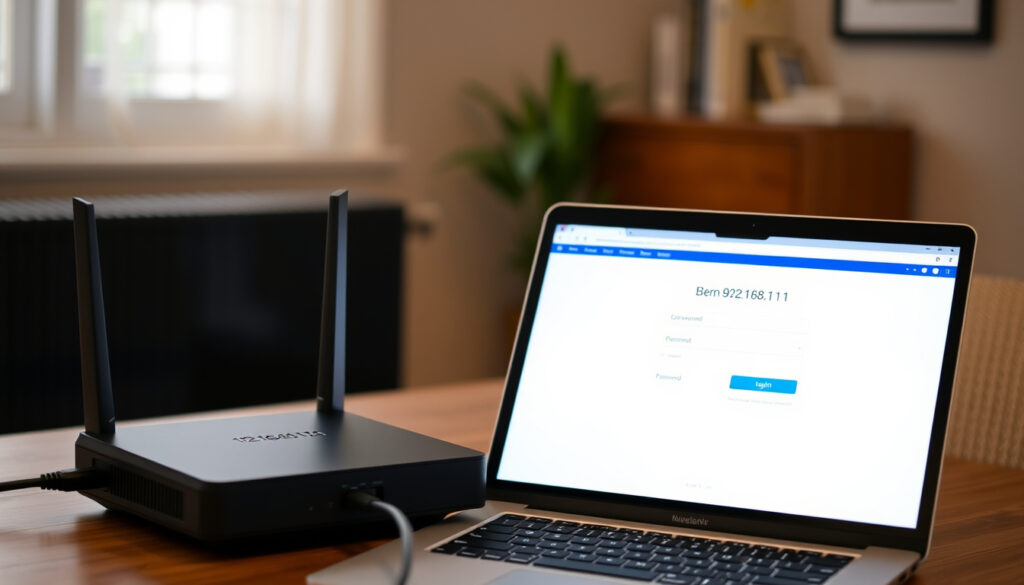
192.168.1.1 Login: How to Access Router Admin
You probably know that little IP address you type into a browser to tweak your router settings—but what happens when the page just won’t load? Whether you’re trying to update your Wi-Fi password or open port forwarding, getting locked out of 192.168.1.1 is frustrating enough to make anyone want to yeet the router out the window. Here’s how to actually get in and fix the most common culprits.
Default Gateway IP: 192.168.1.1 · Common Username: admin · Common Password: admin · Used by Brands: Linksys, NETGEAR · Access Method: Web browser
Quick snapshot
- 192.168.1.1 is a private IPv4 address used as default gateway by Linksys, NETGEAR, and TP-Link routers (YouTube Troubleshooting Video)
- Type http://192.168.1.1 (not https) in your browser’s address bar (YouTube Troubleshooting Video)
- VPN software commonly blocks local router access (YouTube Troubleshooting Video)
- Some router firmware blocks Linux or Android user agents, though the exact firmware versions affected remain unspecified (TP-Link Community Forum)
- Connection refused can occur after firmware updates, but which specific updates cause this varies by router model (TP-Link Community Forum)
- A Netgear user reported access suddenly failing “last week” after prior successful logins (Tom’s Hardware Forum)
- Chrome 113 and Firefox 112 user agents appeared in TP-Link forum discussions in May 2023 (TP-Link Community Forum)
- Try alternate addresses like routerlogin.net for Netgear or 192.168.0.1 for other brands if 192.168.1.1 fails (Tom’s Hardware Forum)
- If all else fails, factory reset the router—Ubiquiti devices use a paperclip method with direct PC connection (Ubiquiti Community)
Five core scenarios explain most 192.168.1.1 login failures: wrong network, protocol mismatch, browser blocks, network misconfiguration, or router firmware issues.
| Field | Value |
|---|---|
| IP Address | 192.168.1.1 |
| Protocol | HTTP |
| Default Username | admin |
| Default Password | admin |
| Router Brands | Linksys, NETGEAR, TP-Link |
How do I access my 192.168.1.1 router login page?
The first and most overlooked step: make sure you’re actually connected to the router you want to manage. A YouTube troubleshooting guide emphasizes that users cannot access their router admin page from a different internet connection or someone else’s network (YouTube Troubleshooting Video). The most common cause of “connection refused” is being on the wrong network—your neighbor’s Wi-Fi, a work VPN, or a different router entirely.
Connect to router network
- Disconnect from any VPN before attempting access
- Make sure your device is connected to the correct local network, either via Wi-Fi or Ethernet
- Check that your network adapter is set to obtain an IP address automatically via DHCP, not manually configured (YouTube Troubleshooting Video)
Enter IP in browser
- Type http://192.168.1.1 directly into your browser’s address bar—do not search for it
- Always use http, not https; dropping the “s” resolves many “site can’t be reached” errors (YouTube Troubleshooting Video)
- Press Enter and wait 10–15 seconds for the login page to load
Handle common errors
- If you get “err_connection_refused,” try clearing your browser cache and cookies
- Browser extensions, especially ad blockers or privacy tools, sometimes block local IP access—try an incognito window (YouTube Troubleshooting Video)
- Try a different browser: Internet Explorer or Edge sometimes work when Chrome fails (YouTube Troubleshooting Video)
Most users waste 20 minutes chasing software fixes when the real problem is being on the wrong network. Before trying any other step, confirm your device shows the correct SSID and that you have a local IP in the 192.168.x.x range.
How do I access 192.168.1.1 admin?
Once you’ve confirmed you’re on the right network, verifying your router’s actual gateway IP prevents a lot of wasted effort. On Windows, open Command Prompt and type “ipconfig” to check the Default Gateway field—whatever IP appears there is what you should use (YouTube Troubleshooting Video). Your router might be using 192.168.0.1, 10.0.0.1, or another address instead.
Verify IP is correct gateway
- Windows: Run ipconfig and look for “Default Gateway”
- macOS or Linux: Use ifconfig or ip route to find the gateway (YouTube Troubleshooting Video)
- Alternatively, check your Wi-Fi adapter’s DNS server IP—it often matches the router address (YouTube Troubleshooting Video)
Login with credentials
- Enter the default username “admin” and password “admin” for most Linksys, NETGEAR, and TP-Link routers
- If those don’t work, try “password” as the password, or leave the password field blank
- TP-Link’s Tether app shows the correct HTTP link for the web GUI and can verify whether a factory reset was successful (TP-Link Community Forum)
Troubleshoot access denial
- Disable any active VPN—VPN software commonly blocks local router access (YouTube Troubleshooting Video)
- Some TP-Link firmware blocks Firefox on Linux while allowing Chrome on Windows—switching user agents resolved this for at least one affected user (TP-Link Community Forum)
- For Netgear routers specifically, try routerlogin.net as an alternative domain when the IP fails (Tom’s Hardware Forum)
Default credentials are factory-set and rarely expire—but if someone changed them before you moved in, you’re stuck resetting the router anyway. There’s no way to recover a custom admin password without a hard reset.
The implication: before assuming your router is broken, spend 60 seconds confirming the correct IP via ipconfig.
How to change 192.168.1.1 Wi-Fi password?
After logging into the admin panel, changing your Wi-Fi password takes less than two minutes—but skipping the reconnection step trips up a surprising number of users. Every device that was connected to your network will need the new password, so do this when you’re ready to reconnect everything.
Navigate to wireless settings
- Look for tabs or menu items labeled “Wireless,” “Wi-Fi,” “Network Settings,” or “Wireless Security”
- On TP-Link routers, it’s usually under “Wireless” then “Wireless Security”
- On NETGEAR, find “Advanced” then “Wireless” settings
Enter new password
- Find the “Password,” “PSK Key,” or “Network Key” field
- Use a strong password: minimum 12 characters, mixing uppercase, lowercase, numbers, and symbols
- Select WPA3 if available, otherwise WPA2-PSK (AES) for best security (TP-Link Community Forum)
Save and reconnect devices
- Click “Save” or “Apply”—the router may restart automatically
- Wait 30 seconds for the router to fully reboot
- Reconnect your devices using the new password
- Test the connection on at least one device before assuming everything worked
Many users forget to update their SSID (network name) when changing the password. If you’re doing this after a security concern, consider renaming the network too—old network names can still be visible to neighbors even after a password change.
How do I fix 192.168.1.1 refused to connect?
“Err_connection_refused” on 192.168.1.1 usually means the browser reached your network but the router’s web server isn’t responding. This happens more often than you’d think—Tom’s Hardware forums document cases where Netgear routers suddenly stopped accepting admin page requests out of nowhere, with no firmware update or user action triggering it (Tom’s Hardware Forum).
Restart router and device
- Power cycle the router: unplug for 30 seconds, then plug back in
- Also restart your computer or phone
- Wait for the router’s lights to stabilize before trying again
Check cable connections
- If using Ethernet, plug into a LAN port (typically yellow-colored), not the WAN/Internet port (usually blue or gray) (YouTube Troubleshooting Video)
- Test your Ethernet cable with a cable tester if available—damaged cables cause intermittent connection failures (YouTube Troubleshooting Video)
- Try a different cable or port on the router
Reset router if needed
- For Ubiquiti routers: reset with a paperclip by holding the reset button for 10 seconds, then connect your PC directly to a LAN port (Ubiquiti Community)
- For TP-Link: use the Tether app to perform a factory reset—this confirms the reset completed properly (TP-Link Community Forum)
- A factory reset returns all settings to defaults, including the admin password
Resetting the router erases all custom settings—port forwards, static IPs, custom DNS, parental controls. Document your settings before resetting, or accept that you’ll need to reconfigure everything from scratch.
The pattern: sudden “refused to connect” errors without any user changes often point to firmware quirks or network misconfiguration rather than hardware failure.
What is the default password for 192.168.1.1 admin?
The default credentials vary by manufacturer, but “admin” / “admin” remains the most common combination across Linksys, NETGEAR, and TP-Link devices. If the router came from your ISP, however, the defaults may have been changed—check the sticker on the router itself for model-specific credentials.
Common defaults by brand
Most consumer routers fall back to one of these credential sets, though you should always verify against your device’s label first.
| Brand | Default Username | Default Password |
|---|---|---|
| Linksys | admin | admin or blank |
| NETGEAR | admin | password or blank |
| TP-Link | admin | admin |
| Some older routers | admin | 1234 |
| Some older routers | root | root |
Check router sticker
- Most routers have a label on the bottom or back with the default SSID, Wi-Fi password, and sometimes the admin login
- The sticker also shows the model number, which you can cross-reference with the manufacturer’s support site
Reset to factory
- If you can’t log in and don’t know the custom password, perform a hard reset
- Locate the small reset button (usually recessed), hold it for 10–15 seconds until the lights flash
- After reset, use the factory defaults from the sticker or the common defaults listed above
- Ubiquiti devices specifically require a paperclip reset for new setups, with the PC connected directly to a LAN port (Ubiquiti Community)
If you’ve inherited a router with an unknown admin password, a factory reset is your only option—but it also wipes any custom configuration you might have wanted to keep. Weigh whether you actually need admin access versus just reconnecting a device to Wi-Fi.
Browser compatibility and user agent issues
One often-overlooked cause of login failures is the browser itself. TP-Link’s firmware has been documented blocking Firefox on Linux while accepting Chrome on Windows—a quirk that wastes hours of troubleshooting if you don’t know to look for it (TP-Link Community Forum). The issue stems from how certain router firmware identifies and allows/block browser user agents.
Confirmed facts
- 192.168.1.1 is a private IPv4 address used for local network gateway access
- HTTP (not HTTPS) is typically required for router admin pages
- VPN software commonly blocks local router access
- The ipconfig command reveals the actual default gateway on Windows
- routerlogin.net works as an alternative for Netgear when the IP fails
Common rumors
- Some routers use 192.168.1.1 as their admin address (true for many, but not all)
- Firmware updates always improve compatibility (sometimes they break browser access)
“It’s fixed now by switching user agent—it allows ‘Mozilla/5.0 (Windows NT 10.0; WOW64; x64) AppleWebKit/537.36…Chrome/113.0.5666.197’ but doesn’t allow ‘Mozilla/5.0 (X11; Linux x86_64; rv:109.0) Gecko/20100101 Firefox/112.0′”
— woozle, TP-Link Community Forum user (TP-Link Community Forum)
“If you’re getting this kind of error—’this site can’t be reached’—remove the ‘s’ from HTTP.”
— YouTube troubleshooting video narrator (YouTube Troubleshooting Video)
If you’re stuck on a Linux machine or using Firefox and can’t access your router, try switching to Chrome on Windows via a different device, or use the router manufacturer’s mobile app as a workaround. TP-Link’s Tether app, for example, provides a direct link to the web GUI that bypasses some browser-based restrictions (TP-Link Community Forum).
Related reading: LV Car Insurance Login
Accessing the router admin via 192.168.1.1 often involves troubleshooting connection issues, much like steps in the 192.168.1.1 login guide for common home networks.
Frequently asked questions
How do I find my router’s IP address?
On Windows, open Command Prompt and type “ipconfig.” Look for “Default Gateway”—that’s your router’s IP. On Mac, go to System Preferences > Network > Advanced > TCP/IP. On Linux, run “ip route” or “ifconfig” in the terminal.
Why does 192.168.1.1 say page not found?
Your router probably uses a different default gateway. Run ipconfig and check the actual Default Gateway shown. Common alternatives include 192.168.0.1 and 10.0.0.1. Also try using http:// instead of https://.
Can I access 192.168.1.1 from my phone?
Yes, as long as your phone is connected to the same local network. Open your mobile browser and type http://192.168.1.1. If it doesn’t load, try the ipconfig alternative or use the router manufacturer’s app (like TP-Link Tether).
What should I do after a router factory reset?
Reconfigure from scratch: set a new admin password, configure your ISP connection settings, set up your Wi-Fi network name and password, and restore any port forwards or static routes you need. Document these settings this time so you’re not locked out again.
Is 192.168.1.1 secure to use?
192.168.1.1 is only accessible from within your local network, so external attackers can’t reach it directly. However, the admin panel itself has no built-in protection against brute-force attempts. Change the default password immediately and use WPA3 or WPA2 encryption on your Wi-Fi.
How do I change the router admin username?
Most consumer routers don’t allow changing the admin username—only the password. Options vary by model. Check the System Tools or Administration section of your router’s admin panel. If changing the username isn’t supported, create a strong unique password instead.
What if I forgot the admin password?
If you’ve forgotten the custom admin password, perform a factory reset by holding the reset button for 10–15 seconds. This returns all settings to factory defaults, including the admin credentials. You’ll then use the default username and password from the router sticker.
More related posts
 Melanie Sykes Illness, Career Exit, and Gregg Wallace Controversy
 Valdo Calocane: Nottingham Inquiry Victims and Failures
 Cast of Carry-On 2024 – Full Cast List and Key Roles
 High Red Blood Cell Count: Causes, Symptoms & When to Worry
 EasyJet Flight U22902 Emergency Landing: Munich Diversion
 How to Make Hummus – Creamy Homemade Recipe
 Westfield White City Opening Times – Mon-Sat 10am-9pm, Sun 12pm-6pm
 Tongue and Groove Boards – Complete Installation Guide
