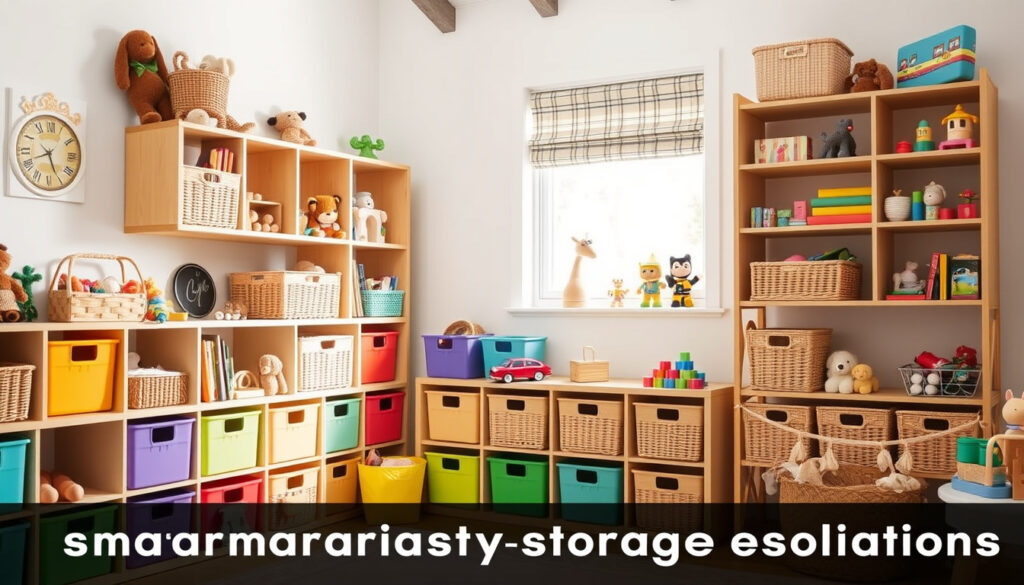
Toy Storage Ideas: Smart and Stylish Solutions for Every Room
If your living room has become a permanent playroom, you’re not alone — and you don’t have to choose between stylish decor and functional toy storage. The right system keeps toys accessible for kids while blending into your home.
Child-accessible shelf height: 23–35 inches · Toys per child limit (4-toy rule): 4 · Weekly declutter routine: 5 to bin, 5 to donate, 5 to return
Quick snapshot
- Open shelving with decorative baskets keeps toys accessible and looks polished (The Homes I Have Made)
- Lidless bins and fabric baskets reduce friction for kids (Castlery)
- Small bins and baskets are the easiest way to organize toys (Crate & Barrel)
- Which retailer offers the best value for modular toy storage
- Long-term durability of plastic vs. fabric vs. wood bins
- Effectiveness of open shelving compared to closed cabinets for reducing visual clutter
- Toy rotation methods (4-toy rule, weekly five-five-five) are increasingly recommended for managing clutter (Castlery)
- Wall-mounted vertical storage is becoming a go‑to for small spaces (Crate & Barrel)
- Furniture with hidden storage (like storage benches) that blends into adult decor will keep growing (The Homes I Have Made)
- Multi‑zone playrooms organized like classrooms are gaining traction in family homes (Lucie’s List)
Five expert sources, one pattern: the best toy storage systems prioritize accessibility, aesthetics, and flexibility — not just containment. Here’s a quick reference of the key facts.
| Source | Key Recommendation |
|---|---|
| The Homes I Have Made | Use real furniture with hidden storage in living rooms |
| Castlery | Child-accessible shelving at 23–35 inches; lidless bins |
| Days With Grey | Remove all toys, sort into categories, then assign containers |
| Crate & Barrel | Small bins and baskets reduce digging and dumping |
| Lucie’s List | Organize play space like a kindergarten classroom: labeled bins, no lids |
Bottom line: Accessibility and style aren’t opposites. Five expert sources agree: the most effective toy storage fits both the child’s reach and the room’s look.
What are the best IKEA toy storage solutions?
IKEA has long been a go‑to for affordable, functional kids’ storage. While no single unit solves every problem, their modular systems offer flexibility for small spaces.
IKEA toy storage units for small spaces
- The KALLAX shelving unit can be used horizontally or vertically with bins and baskets (Castlery recommends open cubbies for easy access).
- TROFAST frames with tubs are purpose‑built for toy storage and come in low heights.
- FLISAT is a child‑sized table with storage drawers.
Popular IKEA toy storage products
- KALLAX (various sizes): open or with inserts.
- TROFAST (wood base with plastic tubs).
- FLISAT table with drawers.
- TROGEN storage system (interlocking boxes).
The trade‑off: IKEA units are generally made of particleboard, so long‑term durability may be lower than solid wood (Lucie’s List notes that plastic bins are easier to clean).
The pattern: IKEA’s strength is in offering scalable systems, not permanent heirlooms — plan to replace or upgrade as your child’s needs grow.
What are creative toy storage ideas?
Beyond the standard plastic bin, there are clever ways to store toys that also enhance your home.
Using storage boxes and baskets on open shelves
- Open shelves at 23–35 inches let children grab their own toys (Castlery’s child‑accessible height range).
- Fabric baskets or woven bins hide clutter while adding texture.
- Lidless bins eliminate the frustration of removing lids (recommended by Castlery).
Toy swaps to reduce clutter
- The 4‑toy rule: each child keeps only four toys out; the rest are stored and rotated (Castlery’s comparison of rotation methods).
- A weekly “five‑five‑five” routine: bin five toys, donate five, return five to their proper home (Castlery).
Adding a storage bench
- Storage benches double as seating and toy hideaways — ideal for living rooms (The Homes I Have Made recommends blending with real furniture).
- JYSK’s storage benches are one example, but any bench with a lift‑top works.
These creative ideas share a common thread: they treat toys as part of the room, not as an afterthought.
The implication: parents who adopt rotation habits reduce the total number of toys in circulation, making any storage system more effective.
How to choose the best toy storage boxes?
Boxes come in plastic, fabric, wood, and more. Each has trade‑offs in durability, safety, and appearance.
Materials and durability
- Plastic bins are lightweight, easy to clean, and stackable (Lucie’s List recommends clear shoe boxes for small pieces).
- Fabric bins (polyester, cotton) look softer but may sag under heavy toys.
- Wood boxes are sturdy and stylish but heavier and more expensive.
Size and stackability
- Small‑sized bins (shoe‑box‑size) are easiest for kids to handle (Crate & Barrel notes small bins reduce digging).
- Wide, shallow drawers work better than deep ones (Castlery warns deep drawers become hard to sort).
- Stackable cubes (like KALLAX inserts) allow vertical expansion.
Design and aesthetics
- Choose bins that match your room’s color scheme — neutral tones blend in living rooms (The Homes I Have Made advises using real furniture over bright plastic organizers).
- Labels (picture labels for pre‑readers) make clean‑up easier.
For families who want a cohesive look, sticking with one material and color family across all bins creates visual calm.
What this means: material choice dictates how often you’ll need to replace bins — plastic wins on maintenance, fabric wins on softness, wood wins on longevity.
What toy storage options does JYSK offer?
JYSK, the Scandinavian retailer, provides another avenue for storage that doesn’t scream “children’s furniture.”
JYSK storage benches and sideboards
- Storage benches with lift‑up seats can hold bulky toys and double as seating.
- Sideboards with cabinets conceal toys behind doors.
Bookcases and cabinets as toy storage
- Bookcases (like JYSK’s TROMPE range) work with decorative baskets inserted on shelves.
- Cabinets with adjustable shelves allow custom heights.
JYSK’s furniture is designed to blend into adult living spaces, making it easier to keep toys in the living room without sacrificing style (The Homes I Have Made echoes this approach).
The catch: JYSK’s selection is smaller than IKEA’s, but the furniture-grade finishes may suit homes where style is a higher priority.
How to incorporate toy storage in a living room?
The living room is the toughest space: you want toys accessible but not overwhelming. Here’s how to strike the balance.
Using decorative baskets and bins
- Place attractive baskets on lower shelves or inside media consoles.
- Fabric bins with neutral patterns blend into the room.
Multi‑functional furniture like ottomans
- Storage ottomans hide toys and provide footrests or extra seating.
- Some ottomans come with removable trays — perfect for Lego or puzzle stations.
Dedicated toy storage drawers
- Use a dresser or sideboard with deep drawers in the living room for toy overflow (The Homes I Have Made suggests dedicated toy zones).
- Label drawers by category (art, cars, blocks) so kids know where things go.
The pattern: the best living‑room storage is invisible until you need it — hidden in plain sight.
The implication: parents who hide toys in existing furniture report fewer battles over clutter because the system respects the room’s adult aesthetic.
Parents who integrate toy storage into existing furniture instead of using bright plastic bins report less visual clutter and more consistent clean‑up habits (The Homes I Have Made).
Confirmed facts
- Open shelving with baskets is a top living‑room solution (The Homes I Have Made)
- Lidless bins and wide, shallow drawers work best for kids (Castlery)
- Small bins and baskets reduce dumping (Crate & Barrel)
- Shelf height of 23–35 inches is child‑accessible (Castlery)
- The 4‑toy rule and five‑five‑five routine help control clutter (Castlery)
What’s unclear
- Which retailer offers the best value for modular toy storage
- Long‑term durability of plastic vs fabric vs wood
- Effectiveness of open vs closed storage in different room sizes
“Explore toy storage to create the perfect solution for your child’s bedroom.”
— IKEA product description (paraphrased)
“29 toy storage ideas to banish mess and clutter.”
— Ideal Home headline (paraphrased)
“Use a bookcase, sideboard, or storage bench to avoid clutter.”
— JYSK inspiration page (paraphrased)
For parents juggling style and sanity, the choice is clear: invest in storage that your child can reach and that your home can live with. A system that combines open shelving with hidden storage, a rotation routine, and kid‑friendly bins will keep chaos contained — and let the living room feel like yours again.
youtube.com, youtube.com, facebook.com, facebook.com, walmart.com, glowing.com, eatplaysay.com
For a deeper dive into keeping play areas tidy, check out this complete guide to organising kids toys that covers everything from bins to shelving units.
Frequently asked questions
How much does toy storage typically cost?
Basic plastic bins cost under $10, while modular units like IKEA KALLAX start around $30. Custom or designer options can run into hundreds. Average spending for a full room system is $100–$300.
Are toy storage boxes safe for toddlers?
Look for boxes without sharp edges, with ventilation holes, and with lightweight lids that won’t pinch small fingers. Fabric bins are generally safer than heavy wooden ones.
What is the best material for toy storage?
Fabric bins are light and soft but less durable. Plastic is easy to clean. Wood is sturdy but heavy. For most families, a mix works: plastic for small parts, fabric for larger toys, wood for furniture pieces.
How to clean toy storage bins?
Plastic bins can be wiped with soapy water. Fabric bins often have removable liners that can be machine washed. Wood should be dusted and spot‑cleaned with a damp cloth.
Can toy storage be used for other items?
Yes. Modular units like KALLAX are often used for books, media, or decor. Storage benches double as entryway seating. Drawers can hold linens or office supplies.
What size toy storage is best for a small apartment?
Vertical storage that uses wall space (wall‑mounted shelves, tall bookcases) maximizes floor space. Mobile toy boxes on castors can be moved between rooms.
How to get kids to use toy storage?
Make it reachable (bottom shelves, low bins), use picture labels, and make clean‑up a game. The 4‑toy rule also helps kids focus on fewer items.
More related posts
 Cast of Carry-On 2024 – Full Cast List and Key Roles
 White Rose Maths Login: Step-by-Step Guide & Troubleshooting
 Debbie Rowe: Ex-Wife of Michael Jackson, Mother of Prince & Paris
 Mandy Smith: Biography, Family, Current Life & Net Worth
 Mazzy Star: History, Hiatus, and Hope Sandoval Explained
 WALL-E: Message, Sequel Rumors, Age Rating & Robot Facts
 Martin Lawrence: Controversies, Career, and Personal Life
 The Crown Season 4 Cast: Complete List of Actors and Roles
