Extra Virgin Olive Oil: Benefits, Differences & Frying Guide
If you’ve ever stood in a grocery aisle wondering whether that pricey bottle of extra virgin olive oil is actually worth it, you’re not alone. Shoppers see the price tag, then spot the cheaper regular olive oil and wonder if they’re just paying for a label. The good news: the science behind what makes extra virgin different from regular olive oil is surprisingly solid—and once you know the facts, your next drizzle becomes a lot more intentional.
Antioxidant compounds: Vitamin E, oleacein, oleocanthal ·
Potential benefits: Heart disease prevention, brain health ·
Smoke point suitability: Safe for frying ·
Cholesterol impact: Supports lowering via diet
Quick snapshot
- Rich in antioxidants (Healthline)
- Supports heart health (PMC/NIH)
- Brain function via gut (PMC/NIH)
- Frying safe (About Olive Oil)
- Daily drizzles (Wernher Valley MD)
- Cold press quality (BHOOC)
- Higher purity (About Olive Oil)
- Better taste (BHOOC)
- More nutrients (TITIN EVOO)
- Acidity under 0.8% (TITIN EVOO)
- 31% lower cancer risk at highest intake (McEvoy Ranch)
| Label | Value |
|---|---|
| Type | Cold-pressed, unrefined |
| Key Nutrients | Vitamin E, polyphenols |
| Acidity | Under 0.8% |
| Best For | Cooking, dressings, health boosts |
“Extra virgin olive oil is associated with the prevention of decline in cognitive function.”
What is the difference between olive oil and extra virgin olive oil?
The distinction comes down to how each oil is processed and the chemical standards they must meet. Extra virgin olive oil is the premium tier—it’s cold-pressed without chemical refining, which means more of the original nutrients stay intact.
Processing methods
Extra virgin olive oil skips the heat and chemicals entirely. The olives are pressed once at low temperatures, a method called cold pressing, which preserves the natural compounds in the fruit (Medical News Today). Regular olive oil, by contrast, goes through refining with heat and solvents. This strips out impurities but also removes most of the beneficial polyphenols and vitamins (BHOOC).
Quality standards
Extra virgin olive oil must meet strict acidity thresholds—≤0.8% by international standards. Virgin olive oil allows up to approximately 2% acidity, while pure or classic olive oil contains only 15-20% of the antioxidants found in extra virgin (TITIN EVOO). Both the FDA and the American Heart Association have designated olive oils of all qualities, including pure olive oil, as heart healthy—but the extra virgin version delivers more punch per tablespoon (About Olive Oil).
Taste and acidity levels
That peppery kick at the back of your throat? That’s oleocanthal, a compound in extra virgin olive oil with anti-inflammatory properties similar to ibuprofen (TITIN EVOO). Regular olive oil has a neutral taste because the refining process removes the polyphenols responsible for both flavor and much of the health benefits.
“Out of all plant-based cooking oils, olive oil has the highest levels of monounsaturated fatty acids (MUFAs).” Researchers from UC Davis Health report that these MUFAs increase good cholesterol (HDL) while lowering bad cholesterol (LDL).
Is extra virgin olive oil healthy?
Yes—and the evidence backing this claim runs from basic chemistry to large-scale population studies. Extra virgin olive oil is not a health fad; it’s a cornerstone of the Mediterranean diet, which research consistently links to reduced rates of heart disease, stroke, and several chronic conditions (Peptiko.gr).
Antioxidant content
Olive oil contains potent antioxidants, including vitamin E and polyphenols, which help combat oxidative stress and inflammation in the body (Peptiko.gr). Extra virgin olive oil has much higher polyphenol content compared to regular olive oil (BHOOC). Polyphenols are natural antioxidants that support heart health, reduce inflammation, and protect cells from damage.
Heart health support
Out of all plant-based cooking oils, olive oil has the highest levels of monounsaturated fatty acids (MUFAs) (UC Davis Health). These MUFAs have been shown to increase levels of good cholesterol (HDL) while lowering bad cholesterol (LDL) (UC Davis Health). Extra virgin olive oil is associated with both the prevention and reversion of metabolic syndrome, and habitual use is linked to decreasing the risk of cardiovascular disease, cerebral vascular accidents, and type 2 diabetes (PMC/NIH).
Brain protection via gut
Extra virgin olive oil is associated with the prevention of decline in cognitive function (PMC/NIH). The mechanism involves the gut-brain axis: the compounds in EVOO influence gut bacteria, which then send signals that protect brain cells. This connection is why researchers continue studying olive oil’s role in preventing dementia and age-related cognitive decline.
What this means: extra virgin olive oil isn’t just good for your heart—its benefits ripple across multiple body systems, from the lining of your blood vessels to your cognitive function.
Regular consumption of 1.5 to 4 tablespoons of extra virgin olive oil per day has been linked to lower all-cause mortality, and this association was not replicated for regular olive oil consumers (Wernher Valley MD). Deeper reductions in mortality were noted in those combining higher EVOO consumption with physical activity.
Is olive oil good for cholesterol?
Olive oil does more than simply avoid raising cholesterol—it actively helps shift the balance in your favor. The monounsaturated fats in olive oil are considered heart-healthy and associated with reducing LDL (bad) cholesterol levels (Peptiko.gr).
Dietary role in lowering cholesterol
EVOO is superior in the management of clinical biomarkers including lowering blood pressure and LDL cholesterol, increasing protective HDL cholesterol, and improving glycemic control (PMC/NIH). The compound oleuropein in extra virgin olive oil protects LDL cholesterol from oxidation—a key step in the development of arterial plaque (Healthline). Adding olive oil to your diet benefits cholesterol levels, and when combined with soluble fiber sources, it supports the body’s natural mechanisms for flushing cholesterol.
Comparison to other oils
Both virgin and extra virgin olive oils are far better for health than refined oils like canola, soybean, or sunflower (TITIN EVOO). Pure or classic olive oil has all of the same heart-healthy monounsaturated fat as extra-virgin olive oil, but it contains only 15-20% of the healthy antioxidants and polyphenols found in extra virgin (About Olive Oil).
The catch: if you want the full cholesterol-management benefit, extra virgin is worth the upgrade from pure or classic olive oil. The polyphenols in EVOO do the extra work that refined versions simply can’t.
Can I use extra virgin olive oil for frying?
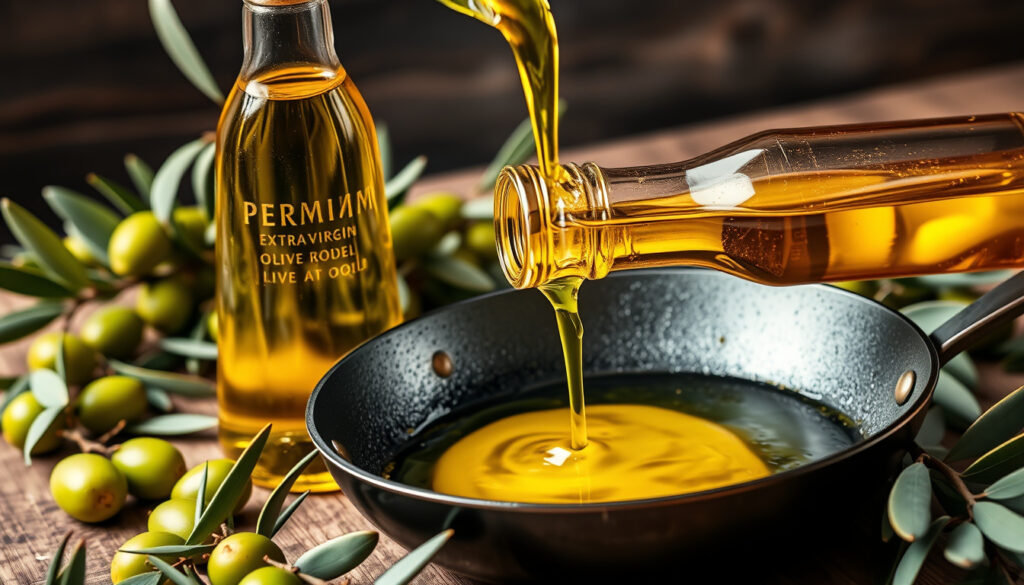
Yes—and the old advice to avoid it for high-heat cooking doesn’t hold up against the science. Extra virgin olive oil has a relatively high smoke point compared to many other cooking oils, meaning it can withstand higher temperatures without breaking down and producing harmful compounds (Peptiko.gr).
Smoke point facts
A 2020 study found that while polyphenol content in extra virgin olive oil decreased by 40% at 258°F and 75% at 338°F compared to raw EVOO, the levels of antioxidants and polyphenols remained relatively high (About Olive Oil). Despite the decrease in polyphenol concentration during cooking, heated extra virgin olive oil still had sufficient polyphenol levels to qualify for the health claim authorized by the EFSA (European Food Safety Authority) (About Olive Oil).
Pros and cons for high heat
Extra virgin olive oil improves the nutritional profile of food when used for deep frying, with more antioxidants and less monounsaturated fatty acids compared to other oils (Olive Wellness Institute). Olive oil produces lower levels of harmful carcinogenic compounds like heterocyclic amines (HAs), polycyclic aromatic hydrocarbons (PAHs), and advanced glycation end-products (AGEs) when used for frying (McEvoy Ranch). According to a 2022 study, individuals with the highest intake of extra virgin olive oil were 31% less likely to develop cancer (McEvoy Ranch).
While EVOO handles heat better than many assume, extremely high temperatures (above 400°F) will still degrade polyphenol content. Save the highest-heat deep frying for oils with higher smoke points, or use EVOO for moderate-temperature cooking where its benefits shine.
Why this matters: you can feel confident using extra virgin olive oil for searing, sautéing, and even light frying. You’re not destroying the health benefits—you’re still getting an oil that outperforms others in the way your food comes out.
Extra virgin olive oil is not heated during production; it is cold pressed, which results in a lower yield and makes it more expensive to produce than refined olive oil (Medical News Today). The processing premium you pay buys you an oil that degrades more gracefully under heat than its refined counterpart.
Is it good to take a spoonful of olive oil every night?
Taking a tablespoon of olive oil before bed is a practice rooted in traditional Mediterranean habits, and modern research offers some support for the habit. The question is whether the night-time timing adds any specific benefit.
Digestion benefits
Olive oil stimulates bile production, which helps break down fats in the digestive system. Bile is stored in the gallbladder and released after eating, but a small amount of oil before bed can trigger a gentle release that some people find helps with morning digestion. Regular consumption of extra virgin olive oil has been observed to reduce the risk of total and cause-specific mortality at the level of 1.5 to 4 tablespoons per day (Wernher Valley MD).
Bile stimulation
The oleic acid in olive oil has been shown to reduce inflammatory markers like C-reactive protein (CRP) (Healthline). Regular consumption of olive oil may be linked to lower levels of certain markers of inflammation, including CRP and interleukin-6 (Healthline). For some people, the timing matters less than the consistency—taking it at the same time each day helps establish a routine.
Daily dosage safety
A spoonful (about one tablespoon) per day falls within the range studied for health benefits. The risk of all-cause mortality and cardiovascular mortality was lower in those with the highest reported daily EVOO consumption, and this association was not replicated in those reporting regular olive oil consumption (Wernher Valley MD). One caveat: taking more than 4 tablespoons daily may add significant calories without proportional benefit.
The trade-off: if you have gallbladder issues or are sensitive to fats at night, you may want to take olive oil with meals instead. For most people, a spoonful before bed is a safe way to hit the daily intake target.
- Reduces all-cause mortality risk (Wernher Valley MD)
- Lowers LDL cholesterol while raising protective HDL (PMC/NIH)
- Provides anti-inflammatory oleocanthal similar to ibuprofen (TITIN EVOO)
- Protects cognitive function via gut-brain axis (PMC/NIH)
- High calorie density (120 calories per tablespoon)
- Exceeding 4 tablespoons daily may reduce benefit proportionality
- Nighttime dosing may trigger gallbladder contractions in sensitive individuals
- Refined olive oil lacks mortality-linked benefits seen with EVOO (Wernher Valley MD)
The table below summarizes how three common olive oil categories compare across the properties that matter most for health-conscious consumers. Use it as a reference when standing in that grocery aisle.
| Property | Extra Virgin | Virgin | Pure/Classic |
|---|---|---|---|
| Acidity Level | ≤0.8% | Up to ~2% | Varies |
| Processing | Cold-pressed | Cold-pressed | Refined |
| Polyphenol Content | Highest | Moderate | 15-20% of EVOO |
| Taste Profile | Peppery, bold | Milder | Neutral |
| Mortality Benefit | Confirmed | Limited data | Not replicated |
Extra virgin olive oil delivers superior antioxidants for heart health and safe frying, as explored in its benefits and uses backed by compelling health research.
Frequently Asked Questions
What makes extra virgin olive oil different from regular?
Extra virgin olive oil is cold-pressed without heat or chemicals, preserving natural polyphenols and antioxidants. Regular olive oil goes through refining that strips most beneficial compounds, leaving a neutral-tasting product with fewer health perks.
Does extra virgin olive oil lower cholesterol?
Research shows EVOO reduces LDL (bad) cholesterol while raising protective HDL. Its polyphenols, particularly oleuropein, protect LDL from oxidation—a key step in arterial plaque formation.
Is extra virgin olive oil safe for high-heat cooking?
Yes. Despite polyphenol loss at high temperatures (40% at 258°F, 75% at 338°F), heated EVOO retains enough antioxidants to meet EFSA health claim standards. It produces fewer harmful compounds than other cooking oils.
What are the benefits of drinking olive oil before bed?
Taking 1-2 tablespoons before sleep stimulates bile production for better morning digestion. Studies link 1.5 to 4 tablespoons daily to lower all-cause mortality, though timing matters less than consistency.
Which is healthier: extra virgin or regular olive oil?
Extra virgin contains up to five times more polyphenols than refined versions. While both have heart-healthy monounsaturated fats, only EVOO consumption has been tied to reduced mortality in clinical studies.
Does olive oil help with digestion?
Olive oil stimulates bile release from the gallbladder, aiding fat digestion. The oleic acid also reduces inflammatory markers like CRP, supporting digestive health when consumed regularly.
How much extra virgin olive oil should I consume daily?
Research indicates 1.5 to 4 tablespoons per day provides measurable health benefits. Exceeding 4 tablespoons may add excess calories without proportional benefit.
For dishes that pair well with EVOO’s flavor profile, explore how to prepare How to Make Hummus – Creamy Homemade Recipe. Those managing protein intake alongside healthy fats may find our How Much Protein Should I Eat – Calculator and Needs Guide useful.
More related posts
 White Company Discount Code: 15% Off April 2026
 Cobra Kai Season 6 Part 3: Release Date and Final Details
 Zara Phillips: Children, Career, and Why She’s Not a Princess
 Gaming Realms Share Price: Is GMR a Good Buy in 2025?
 SteelSeries Arctis Nova Pro Wireless – Battery ANC Sound Guide
 New iPhone Release Date 2026: iPhone 17 & 18 Rumors
 Danny Murphy: Net Worth, Wife, Teams, Career Facts
 Blood Pressure Chart by Age and Gender: Normal Ranges
