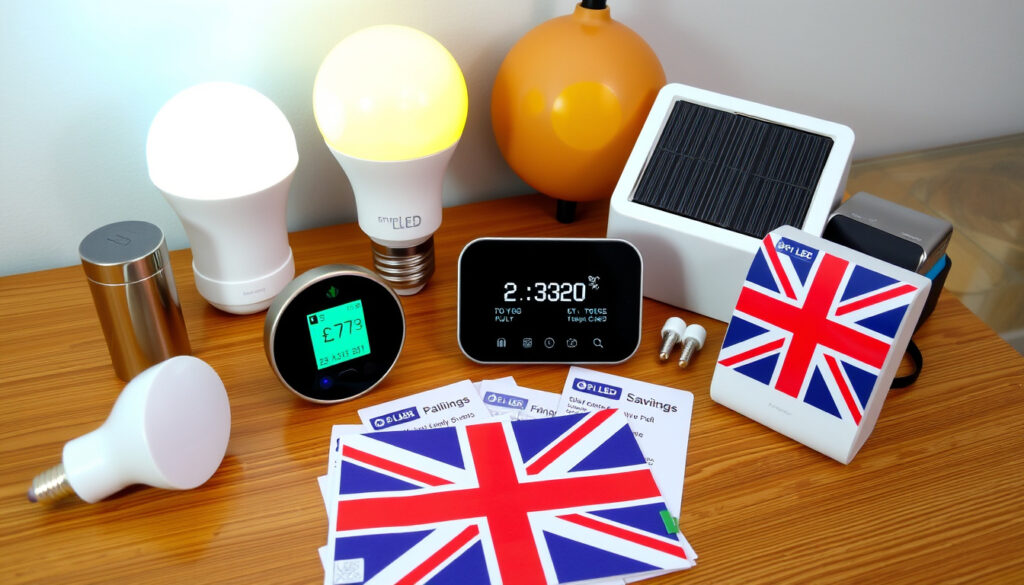
Free Energy Saving Gadgets – UK Eligibility and Savings Guide
Free energy saving gadgets have become a practical lifeline for households across the United Kingdom facing rising energy costs. These devices, ranging from insulation materials to smart heating controls, can significantly reduce monthly utility bills while contributing to national carbon reduction targets. Government-backed schemes have historically made these upgrades accessible to those who might otherwise struggle to afford them.
The Energy Company Obligation 4 (ECO4) scheme represented the most recent major programme delivering free energy saving measures to eligible households. Administered by Ofgem and funded through legal obligations placed on large energy suppliers, the initiative aimed to improve the thermal efficiency of homes rated D, E, F, or G on the Energy Performance Certificate (EPC) scale. However, by 2026, the scheme has entered its final stages with new applications now severely limited or unavailable for most applicants.
Understanding which free energy saving gadgets remain available, who qualifies for them, and what alternatives exist has become increasingly important for households looking to reduce their energy expenditure. This guide examines the current landscape of free energy efficiency measures and the practical steps households can take to access available support.
What Are Free Energy Saving Gadgets?
Free energy saving gadgets encompass a broad category of devices and materials designed to reduce heat loss, improve energy efficiency, and lower utility costs. Unlike consumer electronics that individuals can purchase directly, these items have traditionally been distributed through government-funded programmes targeting households with the greatest need. The value of installed measures under schemes like ECO4 could reach up to £50,000 per property, though most households received a targeted selection of measures appropriate to their property’s requirements.
The distinction between free energy saving gadgets and paid alternatives lies primarily in the funding mechanism rather than the products themselves. The same high-quality insulation, condensing boilers, and smart thermostats available through government schemes can be purchased independently, but the cost barrier means many households would never install them without financial support. Understanding this distinction helps clarify why government intervention has been necessary to improve the nation’s housing stock.
Common Examples of Free Devices
The most frequently installed free energy saving measures include loft insulation, cavity wall insulation, and internal wall insulation. These thermal barriers prevent heat from escaping through the building fabric, maintaining comfortable temperatures with less energy input. Loft insulation alone can reduce heat loss through the roof by up to 25 percent, while properly installed cavity wall insulation addresses one of the largest sources of heat loss in properties built with cavity walls.
Heating system upgrades form another significant category of free energy saving measures. A-rated condensing boilers, which replace old inefficient systems, typically generate annual savings of £600 to £900 based on typical usage patterns. For households without central heating, first-time installation of heating systems has been supported through ECO4, particularly for properties off the gas grid relying on expensive electric or oil heating.
Smart controls have increasingly featured in free energy saving packages. Wireless thermostats enabling room-by-room temperature management allow households to heat only occupied spaces rather than maintaining uniform temperatures throughout the property. These devices connect to smartphones, enabling adjustments when away from home and providing usage data that helps residents understand and modify their energy consumption patterns.
Differences from Paid Options
The primary difference between free and paid energy saving measures lies in upfront costs. Free schemes eliminate the financial barrier that prevents many households from undertaking efficiency improvements, regardless of whether the long-term savings would justify the investment. This approach particularly benefits low-income families who cannot access credit or savings to fund upfront improvements, even when these would pay for themselves over time.
Quality assurance represents another important distinction. Schemes like ECO4 use approved installers who must meet strict technical standards and register their work with appropriate bodies. This oversight provides guarantees that installations meet building regulations and perform as specified. Independent purchases, by contrast, require homeowners to assess installer credentials and product quality themselves, which many find challenging.
By 2026, the ECO4 scheme has largely concluded with new applications very limited or unavailable for most households. Off-gas grid properties with EPC ratings F or G may still have access to residual support. Households should check current alternatives through gov.uk/energy-company-obligation or their energy supplier for the latest available options.
ECO4 delivered upgrades worth up to £50,000 per household, including boilers, insulation, and heating systems
A-rated condensing boilers can save £600-£900 annually compared to older systems
Combined solar panels and heat pump systems could reduce bills by up to 80 percent
Eligibility checks take approximately 30 seconds through online tools on provider websites
Households with income under £31,000 or receiving qualifying benefits may qualify
Properties with EPC ratings D through G were prioritised for support under ECO4
LED lights and general energy-saving advice are available through the Energy Saving Trust independently of ECO4
| Gadget | Install Cost | Annual Savings | Eligibility |
|---|---|---|---|
| Loft Insulation | Free | £100-£250 | EPC D-G, low income or benefits |
| Cavity Wall Insulation | Free | £95-£160 | EPC D-G, suitable property type |
| A-Rated Boiler | Free | £600-£900 | Old inefficient boiler, benefits or low income |
| Air Source Heat Pump | Free (via ECO4) | £1,000-£2,500 | Off-gas homes, specific criteria |
| Smart Thermostat | Free | £80-£200 | With qualifying heating upgrade |
| Solar Panels + Heat Pump | Free (up to £40,000 value) | Up to 80% bill reduction | Off-gas, poor EPC, specific criteria |
| Draught Proofing | Free | £30-£70 | With other qualifying measures |
| Electric Storage Heaters | Free | £200-£400 | Electric heating, no gas supply |
Who Is Eligible for Free Energy Saving Gadgets?
Eligibility for free energy saving gadgets has historically been determined by a combination of financial circumstances, housing characteristics, and geographic factors. The ECO4 scheme focused particularly on vulnerable households and those living in properties with poor energy efficiency ratings. Understanding these criteria helps households assess whether they might have qualified under ECO4 or could access alternative support through successor programmes.
The scheme prioritised households most at risk of fuel poverty, defined as spending more than 10 percent of income on energy costs. This focus reflected the government’s recognition that those least able to afford high energy bills were often living in the least energy-efficient homes. By targeting resources at this intersection of need, schemes like ECO4 aimed to achieve both social welfare and environmental objectives simultaneously.
Income and Benefits Criteria
Households with annual income under £31,000 could qualify for support under ECO4, though this threshold represented one of several possible routes to eligibility rather than a guarantee of support. Income thresholds varied depending on household size, location, and the specific measures required. Applicants were encouraged to use online eligibility checkers, which typically completed assessments in approximately 30 seconds, to determine whether they met the scheme’s financial requirements.
Receipt of qualifying benefits provided another pathway to eligibility. The Help to Heat Group of benefits included Universal Credit, Pension Credit, and various other income-related allowances administered by the Department for Work and Pensions. Households receiving these benefits were automatically considered for support, streamlining the application process considerably. However, benefits receipt alone did not guarantee approval, as property suitability and value-for-money considerations also influenced funding decisions.
Importantly, benefits were not always required for eligibility. Households meeting income thresholds or those living in social housing could access support regardless of whether they received means-tested benefits. Social housing residents often had broader access to schemes, with some social landlords having pre-arranged funding arrangements that made their tenants automatically eligible for efficiency improvements.
Household Requirements
Property characteristics played a crucial role in determining eligibility. Homes were required to have an EPC rating of D, E, F, or G to qualify for most ECO4 measures. Properties rated E or above were generally considered sufficiently energy efficient and therefore lower priority for public funding. The rationale behind this requirement was that resources should be directed toward the worst-performing properties where improvements would deliver the greatest benefits to householders and the environment.
Off-gas grid homes received special consideration under ECO4, particularly in the scheme’s later stages. Properties without access to the mains gas network often relied on more expensive heating fuels such as oil, electricity, or LPG, making energy efficiency improvements particularly valuable. These households could access support for measures including heat pumps, solar panels, and improved insulation even if their circumstances might not otherwise meet eligibility criteria. The scheme applied stricter requirements for off-gas homes in its final phases, targeting properties with EPC ratings F or G.
Online eligibility checkers from providers including ECO4everyone and Glow Green can determine potential qualification in approximately 30 seconds. These tools ask basic questions about benefits, income, property type, and current heating system. Even if the main ECO4 scheme has closed, similar assessment tools may identify alternative support available in 2026 through government energy programmes.
Health conditions worsened by cold provided another eligibility pathway under ECO4. Households containing individuals whose medical conditions made them particularly vulnerable to cold environments could access support, recognising the connection between energy efficiency, health outcomes, and demand on the National Health Service. This provision acknowledged that inadequate heating affected not just comfort but actual health, particularly for elderly residents, young children, and those with respiratory or circulatory conditions.
What Government Schemes Provide Free Energy Savers?
The United Kingdom has operated several iterations of the Energy Company Obligation since its introduction in 2013. Each phase expanded the scope and budget of energy efficiency support while refining targeting criteria based on lessons learned from previous programmes. The current landscape following ECO4’s conclusion requires households to understand what schemes remain active and what alternatives exist for those previously eligible under the main programme.
Government energy efficiency schemes have been delivered through partnerships between regulatory bodies, energy suppliers, and approved installation networks. Ofgem’s oversight ensured that participating companies met their obligations while maintaining quality standards across all installations. Major energy suppliers including E.ON, EDF, and others acted as delivery partners, managing applications and coordinating with local installation firms to complete improvements across the country.
UK ECO4 Scheme Details
ECO4 represented the fourth and most recent phase of the Energy Company Obligation, launching in 2022 and running until its phased conclusion in 2025 and 2026. The scheme was designed to run until 2026 under its original framework, but by 2025 it had entered its final stages with remaining funds directed toward completing already-approved installations rather than accepting new applications from households not yet engaged with the process.
The scheme’s scope included measures previously delivered under ECO3, with particular emphasis on insulation measures that form the foundation of energy-efficient homes. Cavity wall insulation, solid wall insulation, loft insulation, and roof insulation were all available depending on property suitability. The rationale for this focus recognised that insulation provides permanent improvement to building fabric, reducing heat loss regardless of how the property is heated or how occupants behave.
Boiler replacements and heating upgrades formed a substantial component of ECO4 delivery. A-rated condensing boilers offered significant efficiency improvements over older systems, with modern condensing technology extracting additional heat from combustion gases that would otherwise be lost through the flue. The 25-year warranties typically offered with new boilers provided long-term assurance of performance and reduced concerns about early failure.
Heat pumps featured prominently in ECO4’s later delivery, particularly for off-gas properties. Air source heat pumps could provide efficient heating even in older properties, especially when combined with appropriate insulation and secondary measures. The £30,000 to £40,000 value of combined solar panel and heat pump systems represented the upper end of ECO4 support, available to households meeting stringent criteria that prioritised those with the greatest need and the properties least able to achieve reasonable comfort through conventional means.
Local Authority and Alternative Programmes
Beyond national schemes like ECO4, local authorities have maintained varying levels of energy efficiency support drawing on their own resources and funding allocations. These local programmes often complement national schemes, targeting households missed by broader initiatives or addressing specific local housing stock challenges. Households unable to access ECO4 should contact their local council to determine what local support might be available in their area.
The Energy Saving Trust provides independent advice and guidance on energy efficiency measures, though it does not directly fund installations. The organisation offers savings calculators, recommendations for efficient appliances, and guidance on draught proofing and insulation approaches suitable for different property types. While not a source of free gadgets directly, the Trust’s resources help households understand which improvements would deliver greatest value and how to approach installations even when funding must come from elsewhere.
The Boiler Upgrade Scheme, available through gov.uk/apply-boiler-upgrade-scheme, provides grants toward heat pump installations for households not covered by ECO4. This scheme offers up to £7,500 toward air source heat pump installation, helping to bridge the cost gap between conventional gas boilers and low-carbon heating alternatives. Eligibility criteria differ from ECO4, with the scheme open to homeowners and some landlords meeting specific property requirements.
ECO4 has largely concluded with new applications very limited or unavailable as of 2026. Households should verify current availability through official government channels rather than assuming previously available support remains accessible. Energy suppliers including E.ON have confirmed ECO4’s closure, directing applicants toward alternative sources of information and potential support through Energy Saving Trust and Ofgem websites.
How Much Can Free Energy Gadgets Save on Bills?
The financial benefits from free energy saving gadgets vary substantially depending on the measures installed, the property’s previous condition, household occupancy patterns, and the fuel types being replaced. Understanding realistic savings expectations helps households prioritise measures and recognise the value of accessing available support even when applications face delays or limitations.
Savings estimates from reliable sources including Ofgem, energy suppliers, and independent assessors provide useful benchmarks, though individual results inevitably differ from averages. Properties with the poorest initial efficiency typically achieve the largest percentage improvements, as they have more waste to eliminate. A home losing substantial heat through uninsulated walls and roof will benefit more from insulation than a property already reasonably well-protected.
Estimated Annual Savings
Boiler replacements consistently deliver among the most predictable and substantial savings. An old G-rated boiler might achieve only 60 percent efficiency, meaning 40 percent of the energy consumed is wasted. Modern A-rated condensing boilers regularly exceed 90 percent efficiency, and when replacing an inefficient predecessor, annual savings of £600 to £900 are typical for households with gas central heating. These savings recur annually over the boiler’s lifetime, which can exceed 15 years for well-maintained modern units.
Insulation savings depend heavily on property type and existing conditions. Loft insulation costs between £300 and £500 to install professionally but saves approximately £100 to £250 annually, with the investment typically recovering its cost within two to five years through reduced heating bills. Cavity wall insulation costs £400 to £600 on average but generates yearly savings of £95 to £160, meaning payback periods of three to six years are common.
Heat pumps and solar panel combinations represent the highest-value installations available under ECO4, potentially reducing energy bills by up to 80 percent for suitable properties. These comprehensive systems require substantial property suitability, including adequate insulation to work efficiently, and are therefore typically reserved for properties undergoing whole-house upgrades. The £30,000 to £40,000 value of these installations reflects both the equipment cost and the expertise required for proper design and commissioning.
Beyond Direct Financial Savings
Energy efficiency improvements generate benefits extending beyond reduced utility bills. Properties with improved EPC ratings following insulation, heating, or other upgrades often see increases in market value, as energy performance has become an increasingly important factor in property valuation and buyer decision-making. The minimum Energy Efficiency Standards for private rented properties mean landlords face increasing pressure to improve properties to at least EPC rating E, driving demand for efficiency measures.
Health benefits represent another significant but often overlooked advantage of energy efficiency improvements. Warmer, more consistently heated homes reduce risks of respiratory conditions, cardiovascular problems, and mental health issues associated with cold, damp living conditions. These benefits particularly affect elderly residents, young children, and those with pre-existing health conditions. While difficult to quantify precisely in monetary terms, reduced NHS costs and improved quality of life represent genuine societal gains from energy efficiency investment.
Carbon emissions reductions contribute to national climate change commitments, with the UK targeting net zero emissions by 2050. Residential energy use accounts for a substantial portion of UK carbon emissions, meaning efficiency improvements across the housing stock are essential to meeting these targets. Households accessing free energy saving measures through government schemes contribute to this collective effort while simultaneously benefiting personally through reduced bills.
Timeline of Key Developments
Understanding the evolution of UK energy efficiency policy helps contextualise the current situation and anticipate likely future developments. The Energy Company Obligation has undergone several iterations, each reflecting changing government priorities, available funding, and lessons learned from implementation. This timeline traces the major milestones that have shaped the landscape for free energy saving gadgets.
-
ECO1 launches as the first phase of the Energy Company Obligation, establishing the framework for energy supplier obligations to improve household efficiency -
ECO2 begins, with modified targets and eligibility criteria focusing on affordable warmth obligations -
ECO3 launches, expanding support to include solid wall insulation and introducing the minimum eligibility threshold of EPC rating E -
ECO4 launches, designed to run until 2026, with increased focus on low-income households and properties with the poorest energy performance ratings -
ECO4 enters final stages with scheme completion accelerated and remaining funds directed toward completing approved applications -
ECO4 largely concludes with new applications very limited or unavailable; successor arrangements and alternative schemes under review
What Is Established Versus What Remains Unclear
Clarity about what is confirmed versus uncertain helps households manage expectations when seeking energy efficiency support. The following assessment distinguishes between well-established facts derived from official sources and areas where information remains incomplete or where circumstances may have changed.
| Established Information | Uncertain or Evolving Areas |
|---|---|
| ECO4 has largely concluded with new applications very limited in 2026 | Specific details of any successor programme replacing ECO4 |
| Households meeting income or benefits criteria could qualify under ECO4 | Whether income thresholds will change in any replacement scheme |
| EPC rating D-G required for most ECO4 measures | How successor schemes may adjust property eligibility criteria |
| Off-gas grid properties had broader eligibility under ECO4 | Whether off-gas households retain priority access to remaining support |
| Savings of £600-£900 annually typical for boiler replacements | How energy price changes affect actual savings calculations |
| Boiler Upgrade Scheme remains active with £7,500 maximum grant | Whether grant levels will change as technology costs evolve |
| Energy suppliers delivered ECO4 under Ofgem oversight | Which suppliers will participate in any future obligation scheme |
Understanding Energy Efficiency Context
The UK faces a significant challenge in improving the energy efficiency of its housing stock, which remains among the least efficient in Europe. A combination of older building stock, historical underinvestment in retrofits, and inconsistent policy approaches has left millions of properties with poor thermal performance. This context helps explain why government intervention through schemes like ECO4 has been necessary and why questions about successor arrangements are generating substantial public interest.
Fuel poverty affects approximately 3.17 million households in England according to recent government statistics, defined as households spending more than 10 percent of income on energy to maintain adequate heating. These households are disproportionately concentrated in the least efficient properties, creating a vicious cycle where those least able to afford high energy bills are often paying the most per unit of comfort achieved. Energy efficiency improvements address this inequity directly by reducing the energy required to heat homes to adequate standards.
The intersection between energy efficiency policy and climate commitments has intensified focus on residential buildings as a source of emissions reductions. With heating buildings accounting for around 17 percent of UK carbon emissions, achieving net zero by 2050 requires substantial improvement in how homes are insulated and heated. This regulatory pressure ensures that some form of energy efficiency support will likely continue, though the precise mechanisms may evolve as government balances fiscal constraints against environmental objectives.
Sources and Expert Guidance
Information in this article draws on official government sources, regulatory bodies, and established energy efficiency organisations. Primary sources include Ofgem’s published guidance on the Energy Company Obligation, HM Government’s energy company obligation documentation, and information from participating energy suppliers including E.ON and EDF Energy.
The Energy Company Obligation has delivered significant improvements to household energy efficiency since 2013, with the latest phase focusing on those most at risk of fuel poverty.
— Ofgem, Energy Company Obligation guidance documentation
The Energy Saving Trust provides independent advice on energy efficiency measures applicable across different property types and circumstances. While not directly funding installations, the Trust’s resources help households understand their options and make informed decisions about improvement priorities. The organisation’s savings calculators enable households to estimate potential benefits from various measures based on property characteristics and current energy use.
For households seeking current information on available support, gov.uk/energy-company-obligation represents the authoritative source on government energy efficiency schemes. The website provides up-to-date information on eligibility criteria, available measures, and how to apply. Given the evolving nature of energy policy, checking official sources regularly ensures households have access to the most current guidance.
Key Takeaways and Next Steps
Free energy saving gadgets have provided significant benefits to eligible UK households, reducing energy bills, improving comfort, and contributing to national carbon reduction targets. The ECO4 scheme, which delivered the majority of recent free energy efficiency measures, has now largely concluded with new applications very limited or unavailable as of 2026.
Households interested in improving their energy efficiency should take several practical steps. First, check current eligibility using online tools provided by energy suppliers or official government websites. Even if ECO4 has closed, similar assessment tools may identify alternative support. Second, contact your energy supplier directly to inquire about any available schemes or future programmes. Third, explore the Boiler Upgrade Scheme for potential grants toward heat pump installation. Finally, visit the government’s ECO4 collection page for comprehensive information on current arrangements.
For broader financial planning related to energy costs and household budgets, tools like the UK State Pension Calculator and protein intake calculator provide useful resources for managing different aspects of personal finance and wellbeing.
Frequently Asked Questions
Can renters get free energy saving gadgets?
Private tenants may qualify for free energy saving measures if their landlord provides consent and the property meets eligibility criteria. Social housing tenants often have broader access through pre-arranged arrangements between housing providers and energy schemes. Renters should contact their landlord or housing provider to discuss available options.
How long does installation take?
Installation timelines vary depending on the measures being installed and contractor availability. Simple measures like draught proofing may complete within a day, while full insulation installations typically take two to three days. Complete heating system replacements generally require one to two weeks including necessary building work.
What if I do not qualify for free schemes?
Households not qualifying for free schemes may still access support through the Boiler Upgrade Scheme offering grants up to £7,500 for heat pumps. Energy efficiency improvements also increase property value and reduce ongoing costs, potentially justifying self-funding for those able to invest. The Energy Saving Trust provides advice on cost-effective improvements regardless of eligibility.
Are LED lights covered by government energy schemes?
LED lighting is not typically included in major government schemes like ECO4. However, the Energy Saving Trust recommends LED bulbs as one of the most cost-effective energy-saving measures available, with LED replacements for incandescent bulbs paying back their cost within months through reduced electricity consumption.
What happens to my application if ECO4 has closed?
Applications already in progress when ECO4 closes may still be completed depending on funding availability and installation scheduling. New applications are very limited. Households should contact their energy supplier or the scheme provider they applied through to confirm the status of their particular application.
Do free energy gadgets really work?
Free energy saving measures delivered through approved schemes use industry-standard products installed by qualified professionals. Independent monitoring confirms that properly installed insulation, efficient boilers, and smart controls deliver the savings estimated by scheme administrators, though individual results depend on property characteristics and user behaviour.
What is the Energy Performance Certificate rating needed?
Under ECO4, properties generally needed an EPC rating of D, E, F, or G to qualify for support, with those rated D or E requiring additional qualifying circumstances. Off-gas grid homes faced stricter requirements, with F or G ratings targeted in the scheme’s final phases.
More related posts
 Man Utd Transfer News Today Live: Baleba Rumors
 Mazzy Star: History, Hiatus, and Hope Sandoval Explained
 Moonee Valley Grandstand Demolished: Racecourse Redevelopment
 Jack Nicholson: Why He Stopped Acting
 Parts of a Flower: Complete Guide to Anatomy and Functions
 Gaming Realms Share Price: Is GMR a Good Buy in 2025?
 Jennifer Hudson: Biography, Tragedy, Relationships, and Career
 Harry Potter TV Series: 2026 Release, Cast & Trailer News
