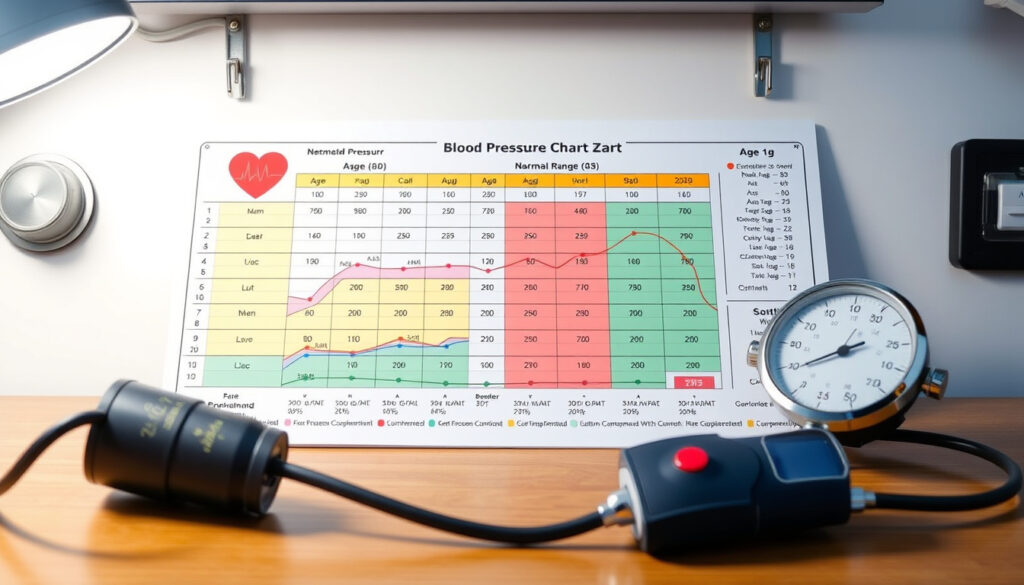
Blood Pressure Chart by Age and Gender: Normal Ranges
If you’ve ever wondered whether your blood pressure reading fits your age or gender, you’re not alone. Doctors use specific benchmarks to assess risk, and those benchmarks shift depending on whether you’re 25 or 75. Knowing where you stand relative to these medical benchmarks can mean the difference between early intervention and a silent problem going unnoticed.
Normal BP 18–39 men: 119/70 mm Hg ·
Normal BP 18–39 women: 110/68 mm Hg ·
Normal BP 40–59 men: 124/77 mm Hg ·
Normal BP 60+ women: 139/68 mm Hg ·
Men 60+ average: 133/69 mm Hg
Quick snapshot
- Normal adult BP threshold is below 120/80 mm Hg per Ubie Doctor’s Note
- Stage 1 hypertension starts at 130-139/80-89 mm Hg per CommonSpirit Health
- Young men average 119/70 mm Hg versus women at 110/68 mm Hg per Heart Research Institute
- Exact height-adjusted BP variations lack comprehensive peer-reviewed studies
- Regional population data remains limited beyond US-centric sources for global applicability
- 2017 AHA guidelines tightened targets from 140/90 to 130/80 mm Hg per Harvard Health
- NIH published peer-reviewed centile data by age and sex in 2020 per NIH PMC
| Age Group | Men (mm Hg) | Women (mm Hg) | Source |
|---|---|---|---|
| 18–39 years | 119/70 | 110/68 | CommonSpirit Health |
| 40–59 years | 124/77 | 122/74 | CommonSpirit Health |
| 60+ years | 133/69 | 139/68 | Doctronic |
Normal blood pressure for adults is below 120/80 mm Hg; average values rise slightly with age as arterial stiffness increases.
— American Heart Association, Understanding Blood Pressure Readings
The previous guidelines set the threshold at 140/90 mm Hg for people younger than age 65 and 150/80 mm Hg for those ages 65 and older. As of 2017, the American Heart Association recommends that adults keep blood pressure levels below 130/80 mm Hg.
— Harvard Health, Reading the New Blood Pressure Guidelines
What should my blood pressure be for my age and gender?
Blood pressure isn’t a single number you memorize once—it shifts across your lifespan, and gender plays a measurable role in those shifts. The American Heart Association recommends that adults over 18 keep readings below 130/80 mm Hg regardless of age, but actual average values vary by demographic group.
Blood pressure ranges for men by age group
Men in their 20s and 30s typically average 119/70 mm Hg, according to CommonSpirit Health. This reflects higher systolic readings than women in the same age range due to larger body mass and hormonal differences. By the 40-59 age bracket, the average rises to 124/77 mm Hg as arterial stiffening begins. Men over 60 average 133/69 mm Hg, with systolic numbers continuing to climb while diastolic actually drops—a pattern tied to reduced vascular elasticity.
Blood pressure ranges for women by age group
Women aged 18-39 average 110/68 mm Hg, notably lower than their male counterparts, per Heart Research Institute. Estrogen provides cardiovascular protection during premenopausal years, keeping systolic numbers down. After menopause, women over 60 average 139/68 mm Hg—actually higher systolic than men in the same age group, a reversal Doctronic attributes to the loss of hormonal protection.
How to read the chart
Each blood pressure reading has two numbers: systolic (the top number, measuring pressure when the heart beats) and diastolic (the bottom number, measuring pressure between beats). Both matter, but systolic pressure becomes the stronger predictor of cardiovascular risk as you age. When comparing your reading to a chart, match your age bracket and gender, then check whether both numbers fall within the normal range or straddle the elevated/hypertensive thresholds.
What is normal blood pressure by age?
Understanding normal ranges by age helps you contextualize your own numbers and recognize when intervention becomes appropriate. Research from NIH PMC confirms that median systolic BP in hospitalized patients rises from 122 mm Hg at age 20 to 132 mm Hg at age 90 for men, a trajectory driven by progressive arterial stiffening.
Normal BP for adults under 40
Adults in their 20s and 30s typically see readings between 110/68 and 119/70 mm Hg, depending on gender. The American Heart Association confirms this window represents optimal cardiovascular function for most people. Elevated blood pressure (120-129 systolic, under 80 diastolic) begins the progression toward hypertension.
Normal BP for middle-aged adults
For adults aged 40-59, normal blood pressure clusters around 120/80 mm Hg, according to Ubie Doctor’s Note. Diastolic pressure peaks around age 50 at approximately 76 mm Hg for men and 69 mm Hg for women, after which it plateaus or declines even as systolic continues climbing.
Normal BP for seniors over 60
Adults over 60 face naturally higher systolic thresholds. According to CommonSpirit Health, the average for men 60+ is 133/69 mm Hg while women 60+ average 139/68 mm Hg. The American Heart Association’s 2017 guideline shift to a uniform 130/80 target represented a 20 mm Hg tightening for adults over 65 compared to prior standards.
What is an ideal blood pressure for a 70 year old?
A 70-year-old typically falls between 130-140/70-80 mm Hg in average readings, with individual targets depending on overall health and comorbidities. The Doctronic analysis shows this range reflects the intersection of age-related vascular changes and modern treatment goals.
Ideal targets under 130/80 mm Hg
The Sesame health platform notes that the 2017 American Heart Association guidelines recommend adults over 65 aim for readings below 130/80 mm Hg when safely achievable. This represents a significant departure from pre-2017 standards that allowed 150/80 mm Hg for seniors, tightening risk management for a demographic most vulnerable to cardiovascular events.
Adjustments for hypertension in elderly
For some older adults with multiple health conditions, aggressive lowering may cause dizziness or falls. Some clinical guidelines suggest a more moderate target of <140/90 mm Hg for certain patients, according to Doctronic. The key is individualized care: a healthy 70-year-old may tolerate the stricter 130/80 target, while someone with frailty or orthostatic hypotension may benefit from a gentler approach.
What is the ideal blood pressure for seniors?
Seniors face a unique balancing act: protecting against heart attack and stroke while avoiding blood pressure low enough to cause falls or dizziness. Research from NIH PMC confirms that the risk-benefit calculation shifts after age 65, which is why treatment guidelines differ from younger adults.
New goals over 65 from NIH
NIH research published in PMC confirms that appropriate blood pressure goals for adults over 65 fall below 150/90 mm Hg according to earlier standards, but the 2017 AHA update recommends <130/80 mm Hg as the preferred target when tolerated. Clinical trials cited in AHA Journals demonstrated that tighter control reduces stroke risk even in older adults who can tolerate it.
Monitoring for older adults
Regular monitoring becomes essential after 60, with home blood pressure cuffs providing valuable trend data between doctor visits. The Heart Research Institute advises that isolated systolic hypertension (high systolic with normal diastolic) is the most common pattern in seniors and carries elevated cardiovascular risk. Checking both arms during initial evaluation helps identify arterial blockages that might skew readings.
Which disease is known as the silent killer?
Hypertension carries the grim nickname “the silent killer” precisely because it causes damage without producing noticeable symptoms until catastrophic events occur. American Heart Association resources confirm that most people with elevated blood pressure feel entirely normal until a heart attack, stroke, or kidney failure reveals the underlying damage.
Why high blood pressure fits the description
High blood pressure damages arteries by creating excessive force against vessel walls over time. This pressure causes micro-tears that become sites for plaque buildup, narrowing arteries and forcing the heart to work harder. By the time symptoms appear—headaches, dizziness, nosebleeds—the cardiovascular system may already have sustained years of silent injury, according to AHA materials.
Related heart failure signs
When hypertension progresses unchecked, it can lead to heart failure through two pathways: the heart muscle thickens from overwork (hypertensive cardiomyopathy) or the heart dilates and weakens. Warning signs include shortness of breath during normal activities, swelling in legs or ankles, fatigue, and persistent cough. Unlike the sudden onset of a heart attack, heart failure develops gradually, which is why regular BP monitoring catches problems early when intervention is most effective.
For younger adults aged 18-39, checking BP once every two years suffices if readings stay normal. After 40, or if you have risk factors like smoking or family history, annual checks become essential. For anyone over 60 or on BP medication, home monitoring provides the data continuity that isolated clinic readings cannot.
The 2017 shift from 140/90 to 130/80 mm Hg as the hypertension threshold reclassified millions of Americans as requiring intervention. According to Harvard Health, this change meant that many previously considered “borderline” now face clear recommendations for lifestyle modification or medication—underscoring why age-appropriate benchmarks matter for personal health decisions.
Upsides
- Age and gender charts provide personalized benchmarks that generic targets miss
- Self-monitoring empowers patients to catch trends between medical appointments
- Early detection through routine checks prevents irreversible cardiovascular damage
- Clear thresholds help physicians make consistent, evidence-based treatment decisions
Downsides
- Over-reliance on population averages may delay treatment for outliers with naturally different BP
- White-coat hypertension causes anxiety-driven spikes that inflate clinic readings
- Lack of symptoms leads many to skip monitoring until problems become severe
- Regional data remains predominantly US-centric, limiting applicability globally
This detailed blood pressure chart by age echoes the key averages, like 119/70 mm Hg for young men and 110/68 for women across adulthood.
Frequently asked questions
What is a normal blood pressure for a woman?
For women under 40, normal blood pressure averages 110/68 mm Hg. After menopause, readings rise to approximately 139/68 mm Hg by age 60+. The American Heart Association recommends all adults maintain readings below 130/80 mm Hg regardless of gender.
What is the average blood pressure reading for a 73 year old?
A 73-year-old typically falls within the 60+ age bracket. Women this age average 139/68 mm Hg while men average 133/69 mm Hg, according to CommonSpirit Health. Individual targets should be set with a physician based on overall health and tolerance for treatment.
What is normal blood pressure for a 70 year old?
Average blood pressure for a 70-year-old falls between 130-140/70-80 mm Hg. The Doctronic analysis confirms this range. Most guidelines recommend targeting below 130/80 mm Hg when safely achievable.
What is the new blood pressure for seniors?
Since 2017, the American Heart Association recommends seniors over 65 aim for below 130/80 mm Hg, according to Sesame. This tightened from the previous target of 150/80 mm Hg for adults over 65.
What are the four signs your heart is quietly failing?
Heart failure typically announces itself through shortness of breath during exertion or lying flat, unexplained fatigue, swelling in the ankles or legs, and persistent coughing or wheezing. These symptoms develop gradually as the heart’s pumping ability declines, often driven by years of uncontrolled hypertension.
Which biscuit is good for high blood pressure?
No specific biscuit treats high blood pressure, but oats-based crackers with minimal sodium provide a fiber-rich alternative that supports cardiovascular health. Reducing processed snack foods and increasing potassium intake through whole foods like bananas and leafy greens does meaningfully influence blood pressure management.
What kind of bread is good for high blood pressure?
Whole grain breads with minimal added sodium and high fiber content support blood pressure management better than refined white bread. The American Heart Association recommends the DASH diet, which emphasizes whole grains, and clinical evidence shows this dietary approach lowers systolic readings by 8-14 mm Hg.
What is the one snack cardiologists want you to eat for a healthier heart?
Cardiologists consistently recommend nuts—particularly walnuts, almonds, and pistachios—as heart-healthy snacks. These provide unsaturated fats, fiber, and minerals like magnesium that support vascular function. A small handful daily (about 1 ounce) correlates with reduced cardiovascular events in population studies.
More related posts
 Cast of Carry-On 2024 – Full Cast List and Key Roles
 Olivia Buzaglo: Age, Career, and Role at Premier League Productions
 Sharon Watts: Character Facts vs Letitia Dean’s Real Life
 White Company Discount Code: 15% Off April 2026
 Katie Leung Biography: Age, Child, Bridgerton & Harry Potter
 Leah Shutkever: From Bromsgrove to 40 World Records
 Andre Silva (born 2000): Car Crash Death and Diogo Jota
 Goldie Hawn Health: Facts vs Rumors
