What Is the Pink Panther? Meaning, Symbolism & History
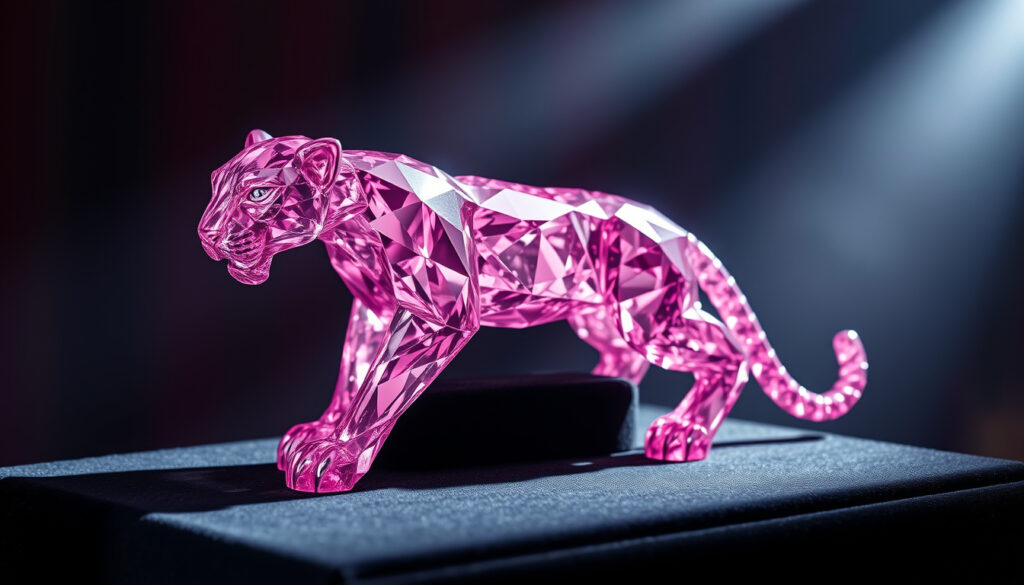
You’ve likely seen the cool, silent pink cartoon cat saunter across your screen to a jazzy tune, but the real Pink Panther started as a giant diamond with a panther-shaped flaw. Most people know the character from the animated shorts, yet the original 1963 film was a live-action heist comedy starring Peter Sellers as the bumbling Inspector Clouseau, and this article clears up the confusion.
First film release: 1963 ·
Original films (1963-1978): 8 ·
Cartoon episodes (1969-1980): 124 ·
Academy Award for Best Animated Short: 1964 (The Pink Phink) ·
Inspector Clouseau portrayed by: Peter Sellers (original)
Quick snapshot
- The Pink Panther is a fictional diamond with a flaw like a leaping panther (Wikipedia (franchise entry))
- The animated pink panther is a separate mute cartoon character that began in the opening credits (Don Markstein’s Toonopedia (cartoon history database))
- Inspector Clouseau is a parody of the bumbling detective archetype (Wikipedia (1963 film))
- Peter Sellers played Clouseau in 5 original Pink Panther films (Wikipedia (series))
- Exact origin of “Pink Panther” as a slang term for a bungler or thief is not documented
- Whether the cartoon character is intended as good or bad remains ambiguous in the franchise
- The Pink Panther’s gender is not defined in any official cartoon material
- The Pink Panther diamond’s exact carat weight is never specified in the films
- 1963: The Pink Panther film released in Italy (Wikipedia (1963 film))
- 1964: The Pink Phink wins Academy Award for Best Animated Short (Wikipedia (franchise))
- 1969: The Pink Panther Show TV series begins (Wikipedia (series))
- 2006: Reboot with Steve Martin as Clouseau (Wikipedia (1963 film))
- The franchise continues through streaming availability of original films and cartoons
- No new theatrical Pink Panther film is currently announced for 2024-2025
The table below provides a quick reference for key facts about the Pink Panther franchise.
| Label | Value |
|---|---|
| First appearance | 1963 film The Pink Panther |
| Animator | Friz Freleng (cartoon) |
| Voice actor | None (silent character) |
| Diamond color | Pink |
| Inspector Clouseau actor | Peter Sellers (original) |
What is the Pink Panther supposed to be?
Original meaning: the Pink Panther diamond
The core of the confusion: the Pink Panther is literally a large pink diamond with a flaw that resembles a leaping panther when viewed closely. In the 1963 film written and directed by Blake Edwards, the diamond is described as the largest in the world and functions purely as a plot device — the object of a heist. There was no pink cartoon animal in the original story whatsoever. The film’s title refers to this gem, not to a character.
The pink panther diamond is presented as a neutral object of desire. According to Wikipedia’s franchise entry, the gem “is the largest diamond in the world in franchise summaries,” and its flaw gives it the name. The diamond is neither good nor bad; it is the treasure that drives the plot forward.
The animated character as a mascot
The animated pink panther was never part of the original script. It first appeared in the opening credits sequence of the 1963 film, created by DePatie-Freleng Enterprises. Friz Freleng and Hawley Pratt designed the character, which accompanied Henry Mancini’s famous theme music. The character proved so popular that within a year, it had its own animated short — The Pink Phink (1964), which won the Academy Award for Best Animated Short.
Between 1969 and 1980, the character starred in 124 episodes of The Pink Panther Show. The cartoon panther is mute, communicates through gestures, and functions as a silent mischief-maker.
The implication: the cartoon panther outlasted the original diamond plot. While the films continued to focus on Inspector Clouseau’s bumbling investigations, the animated panther became a globally recognized mascot that most people associate with the phrase “Pink Panther” today.
What does Pink Panther symbolize?
Symbolism of the diamond in the films
In the live-action films, the Pink Panther diamond symbolizes wealth, desire, and the object of a heist. It drives the plot but carries no moral weight — it is a MacGuffin. The diamond’s rarity and beauty make it something characters lie, cheat, and steal for, positioning it as a symbol of human greed and the absurd lengths people go to obtain luxury.
Symbolism of the cartoon character
The animated Pink Panther symbolizes cool, silent humor and mischief. Without a single line of dialogue, the character communicates through physical comedy and expression. Writer-director Blake Edwards described the inspiration behind the character’s design as “something that was beautiful and elusive.” The panther is a trickster — it outwits authority figures, breaks rules, and creates chaos for its own amusement, yet it is never malicious.
Slang usage adds a third layer. Calling someone a “Pink Panther” can imply they are a bungler (like Clouseau) or a thief. According to Wikipedia’s 1963 film entry, Inspector Clouseau is “a bumbling French detective” whose incompetence became a cultural shorthand. The exact origin of this slang is unclear, but it has entered common usage in English-speaking markets.
Who is Inspector Clouseau a parody of?
Inspector Clouseau as a satirical detective
Inspector Jacques Clouseau is not a direct parody of any single real person. According to Wikipedia’s franchise entry, the character is “a parody of the French detective archetype,” particularly the bumbling detective trope that contrasts sharply with the brilliant, methodical detectives like Sherlock Holmes or Hercule Poirot. Peter Sellers exaggerated traits of stage detectives to create a character defined by overconfidence paired with catastrophic incompetence.
Film historian Leonard Maltin described Clouseau as “one of the great comic creations of the 20th century.” The character’s slapstick physical comedy, mangled French-accented English, and tendency to destroy evidence while trying to solve cases became a formula that carried eight original films. The character was so popular that A Shot in the Dark — originally a different script — was rewritten to retain Clouseau after the character’s breakout success in the first film.
Comparison to classic French detectives
Clouseau works as a satire of the French detective genre, which includes serious figures like Jules Maigret. While Maigret uses psychological insight to solve crimes, Clouseau stumbles into solutions by accident. The contrast between how seriously Clouseau takes himself and how comically he fails is the core joke. This parody extends to French bureaucracy and mannerisms, though critics note it remains affectionate rather than cruel.
Is the Pink Panther good or bad?
The diamond as neutral object
The Pink Panther diamond is neither good nor bad. It is an inanimate object that exists to be stolen, recovered, and stolen again. Its only moral dimension comes from the actions people take to acquire it — and those actions are usually depicted as comedic rather than criminal.
The cartoon character as anti-hero
The animated Pink Panther is a mischievous trickster but not evil. It tricks police officers, outsmarts bullies, and causes chaos for authority figures, but its actions lack malice. The panther is closer to a classic anti-hero like Bugs Bunny: it disrupts order but never causes real harm.
However, the phrase “Pink Panther” used as an insult implies incompetence or criminality, depending on context. Calling someone a “Pink Panther” can mean they are a bungler (like Clouseau) or a thief (like the Phantom jewel thief). This duality — the innocent cartoon versus the loaded slang — is part of why the franchise remains culturally sticky.
Timeline
- 1963: The Pink Panther film released in Italy on December 18, then in the US on March 18, 1964 (Wikipedia (1963 film))
- 1964: The Pink Phink wins Academy Award for Best Animated Short (Wikipedia (franchise))
- 1969: The Pink Panther Show (also known as Think Pink) begins airing on NBC (Wikipedia (series))
- 1978: Last original Peter Sellers Pink Panther film, Revenge of the Pink Panther, released
- 2006: Reboot with Steve Martin as Inspector Clouseau; The Pink Panther grosses $158 million worldwide
- 2010: The Pink Panther (1963) selected for preservation in the United States National Film Registry by the Library of Congress (Wikipedia (1963 film))
This timeline shows how the franchise evolved from a single film to a multi-platform phenomenon.
Clarity section
Confirmed facts
- The Pink Panther is a fictional diamond with a flaw like a leaping panther (Wikipedia (franchise))
- The cartoon character is mute and first appeared in the 1963 film’s opening credits (Wikipedia (1963 film))
- Inspector Clouseau is a parody of the bumbling detective archetype (Don Markstein’s Toonopedia (cartoon history database))
- Peter Sellers played Clouseau in 5 original films (Wikipedia (series))
- The franchise began in 1963 and its animated cartoons began in 1964 with The Pink Phink (Wikipedia (French))
What’s unclear
- Exact origin of “Pink Panther” as slang for a bungler or thief is undocumented
- Whether the character is intended as good or bad remains ambiguous in the franchise
- The Pink Panther’s gender is not defined in any official cartoon material
The patterns here reinforce the dual identity of the Pink Panther as both a gem and a cartoon.
Quotes
“I wanted something that was beautiful and elusive.”
— Blake Edwards, director of The Pink Panther (1963), speaking on the inspiration for the Pink Panther diamond
“One of the great comic creations of the 20th century.”
— Leonard Maltin, film historian, on Inspector Clouseau’s portrayal by Peter Sellers
Summary
The Pink Panther is two separate cultural artifacts that happen to share a name: a famous fictional diamond from a 1963 heist comedy, and a silent cartoon panther that became a global icon. For anyone who has ever wondered what the character is supposed to be, the answer is clearest by separating the two: the diamond is a plot device, the cartoon is a mascot, and Inspector Clouseau sits awkwardly between them as the bumbling detective who made both famous. The trade-off for the franchise’s longevity is clear: the diamond sells luxury, but the panther sells mischief.
nl.wikipedia.org, es.wikipedia.org, id.wikipedia.org, de.wikipedia.org, hr.wikipedia.org, youtube.com, imdb.com, sq.wikipedia.org
Related coverage: history and cultural impact fördjupar bilden av Pink Panther: History, Slang, and Key Facts.
Frequently asked questions
Who is the Pink Panther’s wife?
The Pink Panther cartoon character has no wife. The character is not defined by relationships or family. The question stems from confusion with specific cartoon episodes or misinterpretations of the live-action films, in which Clouseau has a love interest (Simone) but the animated panther remains alone.
What is the Pink Panther song from?
The iconic Pink Panther theme was composed by Henry Mancini for the 1963 film’s opening credits. It won the Academy Award for Best Original Score and has become one of the most recognizable instrumental themes in cinema history.
How many Pink Panther movies are there?
There are 11 theatrical Pink Panther films total: 8 original films (1963-1978) featuring Peter Sellers, plus 3 subsequent entries including the 2006 reboot with Steve Martin and its 2009 sequel.
What is the Pink Panther diamond worth?
The Pink Panther diamond is fictional and has no real-world value. In the franchise, it is described as “the largest diamond in the world” — a plot device rather than a priced object. No official valuation is given in the films.
Is the Pink Panther a real animal?
No. The Pink Panther is a fictional character — either a pink diamond with a panther-shaped flaw (in the live-action films) or a silent cartoon panther (in the animated shorts). It is not a real animal species.
What does it mean to call someone a Pink Panther?
Calling someone a “Pink Panther” can imply they are a bungler (like Inspector Clouseau) or a thief (a reference to the Phantom jewel thief from the films). The slang meaning is informal and context-dependent, with the bumbling interpretation being more common in modern usage.
Who owns the Pink Panther franchise?
The Pink Panther franchise is currently owned by MGM (Metro-Goldwyn-Mayer), which produces and distributes the films. The animated character is trademarked by MGM and DePatie-Freleng Enterprises. In 2022, Amazon acquired MGM, bringing the franchise under Amazon MGM Studios.
Who played the Pink Panther in the Steve Martin film?
The Pink Panther diamond appears as the MacGuffin in the 2006 Steve Martin film. The animated panther appears only in the opening credits. Steve Martin played Inspector Clouseau, not the panther itself. The panther is an animated character, not a human role.
These questions address common confusions that arise from the franchise’s split identity.
- Happy Gilmore Movie Guide — Another classic comedy film guide for comparison
- Guardians of the Galaxy 3 Cast — Film cast guide for a modern franchise
More related posts
 $100 in Pounds – Live Rate and Historical Trends
 George IV: Life, Reign, and Legacy of the Prince Regent
 Matthew Broderick: Biography, Accident, and Irish Home
 Tammy Hembrow: Biography, Net Worth, Children, and Relationships
 DWP Benefit Payments Refund Code: DWP RFD Explained
 FA Cup Final 2024: Manchester United’s 2-1 Win vs Man City
 Lesley Sharp Movies and TV Shows: Full Filmography
