What Is Net Zero? Simple Explanation, Examples & UK Target
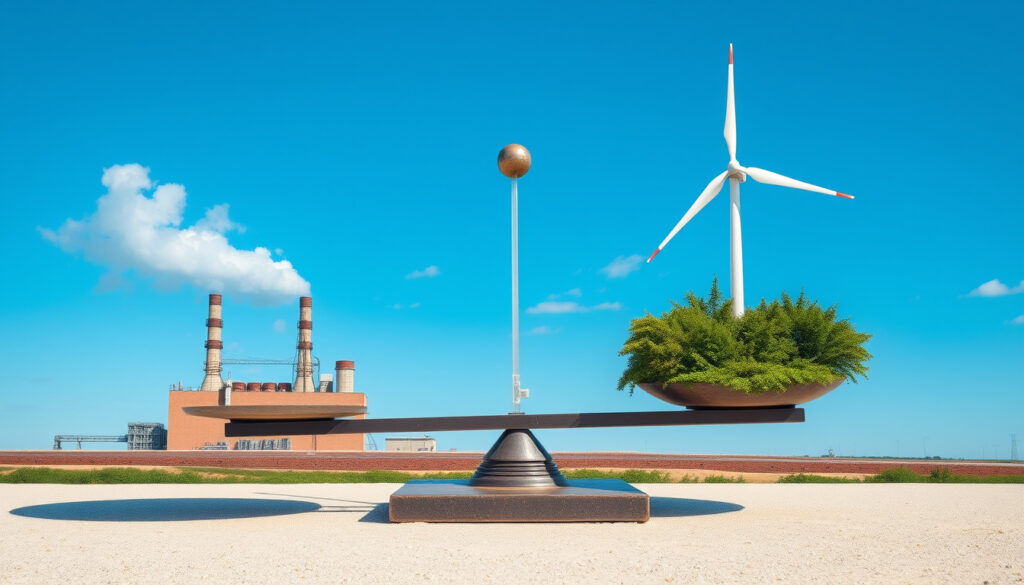
When people hear “net zero,” they often picture a world where all emissions magically disappear. But the reality is more like a balancing act—one where serious cuts to greenhouse gases must go hand in hand with actively removing what’s left. This guide unpacks what net zero actually means, how the UK is tackling it, and why the term is different from “carbon neutral.” By the end, you’ll have a clear, fact-based understanding of the concept that’s shaping climate policy from London to Glasgow.
Global net-zero pledges cover over 90% of world GDP (UN) ·
Countries with net-zero targets more than 140 (Net Zero Tracker) ·
UK net-zero target year 2050 (legally binding) ·
Annual global CO2 emissions ~36.8 billion tonnes (IEA 2023) ·
Carbon removal needed by 2050 10–20 GtCO2/year (IPCC)
Quick snapshot
- Emissions = removals – human-caused greenhouse gases balanced (McKinsey)
- Residual emissions offset by carbon sinks or tech (Greenpeace UK)
- Keeps global warming to 1.5°C (Net Zero Climate)
- Required by the Paris Agreement (UNFCCC)
- Drives policy and investment worldwide (Net Zero Climate)
- UK 2050 target (Net Zero Tracker)
- Microsoft pledge for 2030 (Climeworks)
- Net zero buildings (WorldGBC)
Here are key data points that illustrate the scale of net zero.
| Fact | Value |
|---|---|
| Global emissions (2023) | 36.8 GtCO2 (IEA) |
| Countries with net zero laws | 27 (Net Zero Tracker) |
| UK emissions reduction since 1990 | ~50% (Climate Change Committee) |
| Net zero building definition | WorldGBC: highly efficient + renewable + offsets |
What does net zero mean in simple terms?
The balance between emissions and removals
At its simplest, net zero means you’re not adding extra greenhouse gases to the atmosphere on balance. The idea is that any emissions you produce must be matched by an equal amount of removals. McKinsey (the global consultancy) puts it: “a net-zero gain of greenhouse gases is reached when emissions released equal emissions removed.” This is different from just cutting pollution – it’s about reaching a point where the human-caused contribution to atmospheric CO₂ is effectively zero.
For the UK, the balancing act means that even after slashing emissions from cars, power plants and factories, the country will still have residual emissions. Those leftovers have to be cancelled out – by planting trees, restoring peatlands, or using technology like direct air capture.
Why ‘net’ matters: gross vs net emissions
- Gross emissions are the total amount of greenhouse gases you release into the air. In 2023, global CO₂ emissions reached about 36.8 billion tonnes (IEA).
- Net emissions are gross emissions minus what you remove. National Grid (UK’s energy system operator) explains, net zero requires cutting gross emissions to near zero first, then offsetting the rest.
The distinction is crucial: a country could claim net zero while continuing to emit heavily, if it buys enough offset credits. That approach, critics argue, undermines the goal. Greenpeace UK (the environmental campaign group) stresses, “atmosphere-warming emissions need to fall to effectively zero” to tackle climate change.
Bottom line: Net zero is not just a slogan; it’s a scientific target that demands deep emission cuts first, then removal of whatever remains. For policymakers, the order matters more than the label.
This balance between emissions and removals is the core of net zero.
Is net zero actually possible?
Technological pathways to net zero
The Intergovernmental Panel on Climate Change (IPCC) has concluded that reaching net zero by 2050 is technically achievable, but it requires rapid decarbonisation across every sector. According to Net Zero Climate (the climate analysis platform), global human-caused CO₂ emissions need to fall by about 45% from 2010 levels by 2030 – that’s within the next few years – to stay on track for a 2050 net zero pathway consistent with 1.5°C of warming.
Economic and political challenges
- Cost: The International Energy Agency estimates that clean energy investment needs to triple to $4 trillion a year by 2030.
- Political will: The UN Emissions Gap Report (2023) found that current pledges would lead to a warming of 2.5–2.9°C, far above the Paris Agreement limit.
- Hard-to-abate sectors: Aviation, cement and steel lack ready alternatives. The UK’s Climate Change Committee has flagged these as persistent challenges.
Role of carbon capture and storage
Carbon capture, utilisation and storage (CCUS) is often described as a necessary bridge. Climeworks (the Swiss carbon removal company) advises businesses to aim to halve emissions by 2030 and approach net zero by 2050 under the Science Based Targets initiative Net Zero Standard. Yet the technology remains tiny relative to the scale needed: current global carbon capture capacity is about 40 million tonnes per year, while IPCC says removals of 10–20 billion tonnes per year will be needed by mid-century.
Net zero is technically possible, but the gap between pledges and real-world action is enormous. For the UK, closing that gap means scaling up offshore wind, electric vehicles and heat pumps faster than any government has achieved so far.
Bottom line: The IPCC says net zero by 2050 is feasible. But without sharper near-term cuts and a massive scale-up of carbon removal, the world will miss the 1.5°C target.
The gap between pledges and action remains the greatest obstacle.
What is Britain’s net zero?
UK net zero target: 2050
In 2019, the UK became the first major economy to legislate a net zero emissions target for 2050. Greenpeace UK (the environmental group) notes the policy is enshrined in the Climate Change Act. The target covers all greenhouse gases, not just CO₂, and is legally binding – meaning successive governments are required to meet it.
Key sectors: energy, transport, buildings
- Energy: Coal has been all but phased out; renewables now supply over 40% of UK electricity.
- Transport: Ban on new petrol and diesel cars from 2035.
- Buildings: Heat pump targets and energy efficiency schemes – though progress is slower than required.
The Climate Change Committee (CCC, the UK’s independent advisory body) tracks progress and publishes annual reports. They state the UK has cut emissions by about 50% since 1990 – faster than any other G7 nation – but warn the pace must more than double to stay on track for 2050.
Progress and criticism
Despite the headline progress, the CCC’s 2023 progress report found that only one of 37 key indicators was on track. The UK government has faced legal challenges and criticism from its own advisory body over delays in insulation schemes and heat pump deployment. Critics argue the target itself is credible, but the policies to meet it are not yet in place.
Bottom line: Britain’s net zero target is world-leading in law, but delivery is lagging. For the new government, the choice is clear: accelerate clean infrastructure or risk falling behind the 2050 deadline.
UK progress is notable but not sufficient for the 2050 target.
What are examples of net zero?
Net zero buildings
The World Green Building Council (WorldGBC) defines a net zero carbon building as one that is highly energy efficient, powered by renewable energy on-site or off-site, and offsets any remaining carbon emissions. Examples in the UK include the Edge in London and the Enterprise Centre at the University of East Anglia.
Corporate net zero pledges
- Microsoft has pledged to be carbon negative by 2030, removing more carbon than it emits.
- Apple aims for a net zero supply chain by 2030.
- IKEA has committed to net zero by 2050, with a 50% reduction in absolute emissions by 2030.
Climeworks (carbon removal company) notes that the Science Based Targets initiative has certified net zero targets for over 400 companies globally, requiring deep cuts before any offsetting.
National net zero strategies
| Country | Target year | Legal status |
|---|---|---|
| United Kingdom | 2050 | Legally binding |
| European Union | 2050 | Legally binding (European Climate Law) |
| Japan | 2050 | Policy commitment |
| South Korea | 2050 | Legally binding |
| China | 2060 | Policy commitment |
| Australia | 2050 | Legally binding (as of 2022) |
Five countries, one pattern: nearly all major economies have set net zero deadlines around 2050–2060, but the level of legal enforcement varies widely.
Corporate net zero pledges often rely heavily on carbon offsets, leading to criticism of “greenwashing.” For building standards, the WorldGBC framework demands performance first – a model that policymakers should emulate to ensure credibility.
Bottom line: For investors and consumers, the difference is credibility. Net zero demands structural change; carbon neutral can be a label bought with cheap credits. UK regulators should push for SBTi-aligned net zero over carbon neutrality.
These examples show net zero is being applied across sectors.
Net zero vs carbon neutral: what is the difference?
These two terms are often used interchangeably, but they are not the same. The gap matters because it shapes how companies and governments are judged.
| Aspect | Net zero | Carbon neutral |
|---|---|---|
| Scope of emissions | All greenhouse gases, entire value chain | Often only CO₂, sometimes limited scope |
| Depth of cuts required | 90–95% reduction before offsets | Can rely heavily on offsets without deep cuts |
| Offset quality | Permanent removals (e.g. direct air capture) | May include avoided emissions or temporary offsets |
| Credibility standard | SBTi Net Zero Standard | Various (PAS 2060, Carbon Neutral certified) |
National Grid (UK energy system operator) explains, “carbon neutral and net zero both involve removing carbon from the environment, but net zero places much more focus on cutting emissions first.” In practice, a company claiming carbon neutrality might balance its emissions by buying forest offsets, while a net zero company would first reduce emissions and only offset the unavoidable remainder with permanent removals.
Bottom line: For investors and consumers, the difference is credibility. Net zero demands structural change; carbon neutral can be a label bought with cheap credits. UK regulators should push for SBTi-aligned net zero over carbon neutrality.
The distinction between net zero and carbon neutral has real implications for credibility.
Timeline signal
- 2015 – Paris Agreement sets goal to reach net zero in second half of this century (Net Zero Climate)
- 2019 – UK becomes first major economy to legislate net zero by 2050
- 2021 – IPCC report stresses net zero by 2050 for 1.5°C pathway (IPCC)
- 2023 – Global Stocktake shows insufficient progress (UNFCCC)
- 2050 – Target year for many national net zero pledges
Clarity check
Confirmed facts
- Net zero requires balancing emissions and removals (McKinsey)
- UK has legally binding 2050 target (Greenpeace UK)
- IPCC confirms net zero by 2050 limits warming to 1.5°C (IPCC)
What’s unclear
- Whether all countries will meet their pledges
- Exact role of carbon removal technologies at scale
- Definition consistency across corporate pledges
Perspectives
The climate emergency is a race we are losing, but it is a race we can win.
António Guterres, UN Secretary-General (UN)
The UK has cut emissions faster than any other G7 country, but must go further.
Climate Change Committee (CCC)
Achieving net zero is not just a technical challenge; it’s a test of political will and economic transformation. For the UK, the stakes are high: failure would mean missing the 2050 target and losing credibility on the global stage. But with the right policies – rapid electrification, carbon pricing, and serious investment in removals – net zero remains within reach.
Related reading: **Met Office Rainfall Radar: How It Works and How to Use It** · **Extra Virgin Olive Oil: Benefits, Differences & Frying Guide**
normative.io, carbonchain.com, nationalgrid.com, climatecouncil.org.au
Frequently asked questions
What is the difference between net zero and carbon neutral?
Net zero requires deep emission cuts (90–95%) before offsetting with permanent removals, while carbon neutral often allows more offsetting without deep reductions. Standards like the SBTi Net Zero Standard set strict criteria.
Why is net zero important for climate change?
Achieving net zero by 2050 is the pathway to limit global warming to 1.5°C, as agreed in the Paris Agreement. Without it, climate impacts will accelerate.
What does net zero mean in finance?
In finance, net zero refers to investment portfolios aligned with a 1.5°C pathway – meaning the financed emissions are reduced and balanced by removals, often via the Net Zero Asset Managers initiative.
Can net zero be achieved by 2030?
No, not globally. The IPCC and most scientific bodies say 2050 is the realistic target for net zero. Some companies have 2030 targets for carbon neutrality, but for net zero the timeline is later.
What are the main challenges to reaching net zero?
Hard-to-abate sectors (cement, aviation), scaling carbon removal technology, and aligning political will with investment needs. The UN Emissions Gap Report highlights the gap between pledges and action.
How do net zero buildings work?
They combine ultra-efficient design, on-site renewables (solar, heat pumps), and purchase of verified carbon offsets for remaining emissions, as defined by the WorldGBC.
Which country is closest to net zero?
No country is close yet. Bhutan and Suriname have negative emissions due to forests. Among large economies, the UK has made the most progress (50% reduction since 1990), but still has far to go.
Does net zero mean zero emissions?
No. Net zero means emissions are still produced but are balanced by an equal amount of removals. Gross zero (zero emissions) is only possible for certain sectors.
More related posts
 Pull and Bear Discount Code: 10% Off + 50% Deals 2026
 Lena Headey Movie and TV Show : Complete Career Guide
 Richest Countries in the World 2026 by GDP & GNI per Capita
 What Happened to Micky Flanagan? Career and 2024 Special
 Aaron Taylor-Johnson: Biography, Age, Wife, and Facts
 LV Car Insurance Login – Step-by-Step Access Guide
 Fabrizio Romano: Arsenal Transfer News Today Live Updates
 Yahoo Mail UK Login: Steps, Recovery & Passwordless
