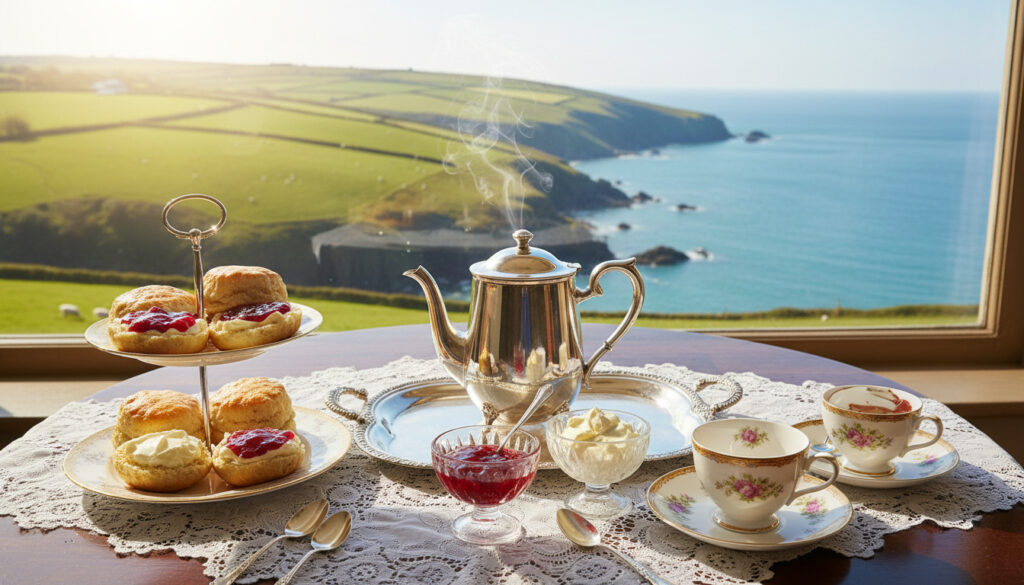
Cream Tea Near Me – Best Devon and Cornwall Guide
Cream tea stands as one of England’s most enduring culinary traditions, combining warm scones with thick clotted cream, sweet strawberry jam, and a pot of strong tea. The ritual traces its lineage to 11th-century Devon, where monks at Tavistock Abbey provided local laborers with bread, preserves, and home-churned clotted cream as sustenance during hard agricultural work.
Today, finding authentic cream tea requires navigating between tourist traps and genuine local establishments. While available nationwide, the tradition remains most authentic in Devon and Cornwall, where regional rivalries persist and ingredient quality is closely guarded. Unlike the formal afternoon tea of Victorian drawing rooms, cream tea maintains a rustic, accessible character—often served in farm shops, historic mills, and coastal cafés.
The tradition carries distinctive regional variations, most notably the ongoing debate between Devon and Cornwall regarding the proper assembly order. Understanding these nuances helps differentiate authentic experiences from generic offerings.
What Is Cream Tea and Where to Find It Near Me?
Warm scones, strawberry jam, clotted cream, and tea
£3.80 to £34+ depending on venue prestige
Traditionally 2–5 PM, though many serve all day
Devon and Cornwall, Southwest England
- Google Maps local pack dominates “near me” search results for cream tea locations
- Devon tradition insists on cream first; Cornwall demands jam first
- Vegan adaptations using coconut cream are emerging at select farm shops like Otterton Mill
- Coastal and rural venues consistently outperform urban tourist spots
- Historic locations require advance booking, particularly during peak seasons
- Authentic establishments label offerings as “Devonshire” or “Cornish”
- All-day availability is standard at farm cafés but limited in formal hotels
| Fact | Details |
|---|---|
| Origin | 11th-century Tavistock Abbey, Devon |
| Core Components | Scone, clotted cream, strawberry jam, black tea |
| Regional Method | Devon: cream first; Cornwall: jam first |
| Typical Duration | 30–60 minutes |
| Price Range | £3.80 (single scone) to £34+ (premium for two) |
| Service Style | Casual (farm shops) to formal (hotels) |
| Peak Season | Year-round; busier on sunny weekends |
| Tea Varieties | Earl Grey, English Breakfast, or local blends |
| Dietary Options | Vegan available by inquiry at select venues |
| Caloric Estimate | 450–600 calories per serving |
| Booking Requirements | Essential for historic venues; optional for farm shops |
Cream Tea vs Afternoon Tea: Key Differences
The distinction between cream tea and afternoon tea reflects broader class and historical divides within British culinary culture. Cream tea originated as working-class fuel in medieval Devon, while afternoon tea emerged in the 1840s as an aristocratic ritual credited to Anna, Duchess of Bedford.
Structurally, cream tea comprises four essential elements: a warm scone (fruit or plain), strawberry or raspberry jam, thick clotted cream with a minimum 55% fat content, and a pot of tea. Afternoon tea in Cornwall and Devon expands this into a multi-course meal featuring finger sandwiches, pastries, cakes, and scones arranged on tiered stands.
The setting distinguishes the two experiences. Cornwall’s afternoon tea offerings emphasize elegance and formal service in hotels, while its cream teas prioritize local dairy and accessibility for hikers and beachgoers. Cream tea venues welcome casual dress and impromptu visits, whereas afternoon tea often requires reservations and smart casual attire.
Jam or Cream First? Regional Cream Tea Traditions
The assembly order of cream and jam divides the Southwest along county lines with almost geological certainty. In Devon, tradition dictates cream first, creating a barrier between the scone and jam that supposedly prevents the bread from becoming soggy. The jam sits atop the cream like a “hat.” Cream Tea Yes Please documents this method as the original 11th-century practice from Tavistock Abbey.
Cornwall reverses this hierarchy, spreading jam directly onto the split scone before adding cream. Locals argue this allows the jam’s sweetness to permeate the scone’s crumb. Wilderness England’s guide to Cornwall cream teas notes this method showcases the quality of local clotted cream as the crowning element.
The debate remains unresolved, with tourism websites describing the rivalry as playful rather than hostile. Regional loyalties run deep, but both methods require the same core ingredients: fresh-baked scones, authentic clotted cream, and quality preserves.
Establishments advertising “Devonshire Tea” typically follow the cream-first method, while “Cornish Cream Tea” implies jam-first. Authentic venues source clotted cream from within their respective counties, with Rodda’s dominating Cornwall and local dairies supplying Devon.
Cream Tea Costs, Timing, and Practical Tips
Pricing varies dramatically by setting. Farm shops like Stokeley Farm Shop offer single scones starting at £3.80, while historic estates such as Bickleigh Castle charge £34 for a premium cream tea for two including grounds tours. Afternoon Tea UK’s Devon listings confirm most traditional venues fall between £5 and £10 per person, with upscale hotel afternoon teas ranging from £20 to £40.
Timing follows agricultural rhythms. While the Duchess of Bedford’s afternoon tea strictly suited 4 PM hunger, cream tea serves as all-day fuel for hikers and beachgoers. Many Cornwall venues including St Michaels Resort and Woods Café serve cream tea throughout opening hours, with elevated Saturday versions. Devon Tour Guides: Eight Favourite Cream Tea Haunts recommends verifying whether venues require booking.
While traditional recipes rely on dairy, farm shops such as Otterton Mill and Trevallick’s can accommodate vegan requests with prior notice. Substitutes typically include coconut-based clotted cream and plant-based scones, though availability varies by location and requires direct inquiry. For those seeking a delicious dairy-free option, you can find a fantastic cream cheese frosting recipe here. Cream cheese frosting recipe
Etiquette remains relaxed compared to formal tea service. Split scones horizontally with a knife or hands—never saw. Apply toppings according to regional preference or personal taste. Use proper china when available, and never substitute butter for clotted cream. Arrive hungry; the scones are filling.
Popular locations including Otterton Mill Café and Bickleigh Castle require advance reservations, particularly on weekends and during peak tourist seasons. Walk-in availability is more common at farm shops like Stokeley and Ullacombe, though waits may occur during sunny afternoons.
How Did Cream Tea Evolve Through History?
- Monks at Tavistock Abbey provide workers with bread, jam, and home-churned clotted cream during rebuilding efforts, establishing the tradition’s origins in Devon.
- Anna, Duchess of Bedford introduces afternoon tea as a formal aristocratic ritual, distinguishing the elaborate custom from rustic cream tea.
- Regional variations solidify, with Devon and Cornwall developing distinct assembly methods and local rivalries.
- Cream tea transitions from agricultural sustenance to tourism staple in the Southwest.
- Global adaptations emerge, with vegan options and all-day service becoming standard at progressive farm shops.
What Is Established vs. What Remains Uncertain?
| Established Information | Information That Remains Uncertain |
|---|---|
| Core components: scone, clotted cream, jam, tea | Exact caloric counts (vary by serving size) |
| 11th-century origins at Tavistock Abbey, Devon | Universal availability of vegan options at all locations |
| Devon: cream first; Cornwall: jam first | Whether one method is objectively superior |
| Clotted cream must contain minimum 55% fat | Real-time availability during peak tourist periods |
| Traditional serving time: 2–5 PM | Specific pricing at independent venues without websites |
| Best consumed fresh, not pre-packaged | Winter closure schedules for coastal venues |
Why Does Cream Tea Hold Cultural Significance?
Cream tea functions as both economic driver and cultural identifier for Devon and Cornwall. The tradition supports local dairy farms, historic mills, and coastal tourism infrastructure while distinguishing the region from the upper-class afternoon tea culture of London and the Home Counties. VisitBritain recognizes cream tea as an iconic British culinary experience essential to the visitor economy.
Unlike the rigid ceremony of afternoon tea, cream tea accommodates contemporary lifestyles. Farm shops welcome hikers straight from coastal paths, while historic tearooms provide respite in 16th-century buildings. This accessibility preserves the tradition’s working-class roots while adapting to modern dietary needs and scheduling demands.
The regional rivalry over assembly methods serves marketing purposes, creating distinct identities for Devon and Cornwall tourism boards. However, both counties share standards for ingredient quality: scones must be fresh-baked, jam typically strawberry or raspberry, and clotted cream thick enough to hold a spoon upright.
What Do Historical and Tourism Experts Say?
Cream tea traces its roots to Tavistock Abbey in Devon during the 11th century, where monks provided workers with bread, jam, and home-churned clotted cream for sustenance.
— National Trust, documenting monastic origins
How Can You Find the Best Cream Tea Near You?
Authentic cream tea requires proximity to quality ingredients and minimal pretension. Search for establishments in Devon or Cornwall advertising “Devonshire” or “Cornish” labels, expect to pay between £5 and £10 for a traditional serving, and inquire about all-day availability if planning morning or evening visits. Devon Tour Guides: Eight Favourite Cream Tea Haunts recommends verifying whether venues require booking, particularly for historic locations. Whether you choose cream-first or jam-first, the essential criteria remain fresh scones, proper clotted cream, and a view worth savoring.
Frequently Asked Questions
Can I get vegan cream tea near me?
Yes, though availability varies. Farm shops like Otterton Mill and Trevallick’s accommodate vegan diets with prior notice, typically using coconut-based clotted cream and plant-based scones.
What should I wear to cream tea?
Attire depends on venue. Farm shops welcome casual hiking gear, while hotel afternoon teas may require smart casual dress. Cream tea generally maintains a relaxed dress code.
Do I need to book cream tea in advance?
Historic venues like Otterton Mill and Bickleigh Castle require reservations, especially weekends. Farm shops typically accept walk-ins, though waits may occur during peak times.
What is clotted cream?
Clotted cream is a thick, rich dairy product containing minimum 55% fat, traditionally made by heating milk and cooling it slowly. It has a distinct yellow crust and is essential to authentic cream tea.
Are dogs allowed at cream tea venues?
Many rural and coastal cream tea locations, particularly woods cafés and farm shops, welcome dogs in outdoor seating areas. Historic tearooms may restrict pets to gardens only.
Is cream tea available year-round?
Yes, cream tea is served year-round, though outdoor seating is weather-dependent. Summer weekends see highest demand, while winter offers cozy indoor service at working mills and historic tearooms.
More related posts
 J.J. Spaun: Biography, Age, Ethnicity, Wife & Career
 WALL-E: Message, Sequel Rumors, Age Rating & Robot Facts
 Man Utd New Kit 25/26: Release, Price & Design
 Erica Stoll: Rory McIlroy’s Wife and Former PGA Employee
 Olivier Richters: Height, Health, Career & Reacher Paulie Role
 LV Car Insurance Login – Step-by-Step Access Guide
 Frank Spencer: Catchphrase, Actor, and Sitcom Legacy
 Flat Sandals for Women: Comfortable & Wide Fit Styles Ireland
