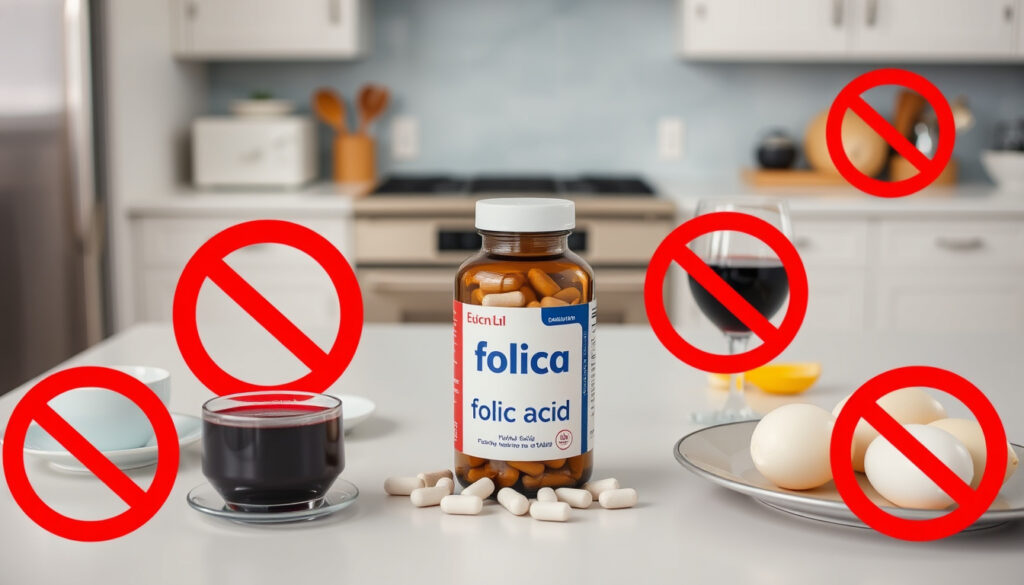
Foods to Avoid When Taking Folic Acid: NHS & WebMD
If you’ve been prescribed folic acid, the myth of a long food-avoidance list collapses against scientific evidence: major health authorities confirm there are no specific foods that directly block folic acid absorption. The real risks center on alcohol timing, medication gaps, and one dangerous masking effect that makes long-term monitoring non-negotiable.
Recommended daily folic acid for adults: 400 mcg · Pregnancy recommendation: 600 mcg · Upper intake limit: 1,000 mcg · Natural folate sources: Leafy greens, beans, citrus
Quick snapshot
- Exact wait time between alcohol and folic acid (Healthline (health publication))
- Long-term effects of unmetabolized folic acid (Healthline (health publication))
- Egg quantity thresholds for folate needs (Healthline (health publication))
- US FDA grain fortification mandate: January 1998 (NIH ODS)
- EFSA upper limit review: 2023 (EFSA (EU food safety authority))
- High-dose regimens require medical supervision
- B12 monitoring recommended for long-term users
- Consult healthcare provider for personalized advice
Six facts about folic acid that matter for anyone taking supplements or evaluating their diet.
The table below summarizes key characteristics of folic acid versus natural dietary folate for quick reference.
| Field | Value |
|---|---|
| Form | Synthetic folate |
| Natural counterpart | Dietary folate |
| Primary use | Pregnancy support |
| Absorption issue | Reduced by high fiber |
| Tier 1 source | NHS.uk guidelines |
What should you not mix with folic acid?
Unlike some supplements with long food-avoidance lists, folic acid stands out for its compatibility. The NHS (UK public health authority) explicitly states you can eat and drink normally while taking folic acid, with no specific foods to avoid. WebMD (medical information resource) confirms there are no known interactions between folic acid and foods or drinks.
Medicines and supplements
- Antacids containing aluminium or magnesium: Take separately—at least 2 hours apart (HSE Ireland (health authority))
- Methotrexate: Folic acid is often prescribed alongside this drug to reduce side effects (WebMD)
- Anticonvulsants: High folic acid doses may reduce seizure medication effectiveness (WebMD (supplement guide))
- 5-fluorouracil and Capecitabine: Large folic acid amounts may increase adverse effects (WebMD)
Herbal interactions
Limited research exists on specific herb-folic acid interactions. Most herbal supplements carry no documented conflict, though you should always disclose supplement use to your healthcare provider.
Alcohol timing
This is where the guidance becomes firm. The NHS (UK health authority) recommends avoiding alcohol with folic acid as it may impair absorption. WebMD notes that large amounts of alcohol may lower vitamin B9 levels in the body. No strict waiting period is defined, but spacing alcoholic drinks away from supplement timing makes sense.
Oranges, wheat bran, and leafy greens—all listed as folate-rich foods by the NHS—contain compounds that theoretically compete for absorption. Yet authorities don’t flag these as problems because the supplement form remains highly bioavailable regardless.
The implication: food-based folate competition becomes irrelevant for supplement users since synthetic folic acid maintains superior bioavailability even alongside potential absorption competitors.
What not to eat after taking folic acid?
The honest answer: nothing specific, according to primary health authorities. What matters more is understanding how folic acid behaves differently from the folate in foods.
High-fiber foods
High-fiber foods like wheat bran and wholegrains don’t block folic acid absorption, but they can modestly reduce the absorption rate of natural food folate. The NIH Office of Dietary Supplements (federal nutrition authority) notes that 85% of folic acid from supplements is bioavailable when taken with food, compared to only 50% for natural food folate.
Citrus fruits
Oranges and orange juice are excellent natural folate sources and part of a balanced diet. They’re not harmful to consume around supplement time—the bioavailability advantage of synthetic folic acid means food folate competition becomes irrelevant.
Animal proteins
Liver appears on NHS folate-rich food lists and provides substantial folate. However, pregnant women should avoid liver entirely regardless of supplement use due to vitamin A toxicity risks (NHS).
What this means: the only food restriction tied to folic acid is liver avoidance during pregnancy, but that stems from vitamin A concerns, not folate interactions.
What time of day is best to take folic acid?
Timing flexibility is one of folic acid’s advantages. No clinical evidence pins down an optimal window, so consistency matters more than specific hour selection.
Morning vs night
Both morning and evening work equally well. Choose whichever supports daily routine adherence. Some people with sensitive stomachs prefer taking supplements with food to reduce nausea or bloating reported as side effects (WebMD).
With or without food
Taking folic acid with food is acceptable and still yields 85% bioavailability—only marginally lower than the 100% on an empty stomach. Food can actually reduce GI discomfort without meaningfully affecting absorption.
Consistency tips
Link supplement intake to an existing daily habit: brushing teeth, breakfast, or placing glasses beside the supplement bottle. The CDC (US public health agency) emphasizes that daily intake matters most for neural tube defect prevention, making routine adherence critical.
The CDC’s emphasis on daily consistency reflects clinical reality: skipping supplements creates unpredictable gaps in folate levels that matter most during the first 28 days of pregnancy when neural tube defects develop.
The pattern: timing flexibility exists because folic acid maintains its effectiveness across the day—the only non-negotiable is establishing a consistent daily habit.
What is the downside of taking folic acid?
Every supplement carries trade-offs. Understanding them prevents surprises and catches problems early.
Side effects
Most people tolerate folic acid well. When side effects occur, they’re typically mild: nausea, bloating, or appetite loss (WebMD). Allergic reactions are rare but possible.
Overdose risks
EFSA (European Food Safety Authority) retains an upper limit of 1,000 μg per day for adults. Staying within this range from all sources—supplements plus fortified foods—prevents potential adverse effects from excessive intake.
Masking deficiencies
This represents the most clinically significant concern. The Mayo Clinic (academic medical center) warns that folic acid supplementation can mask vitamin B12 deficiency neurologic symptoms, allowing irreversible nerve damage to progress undetected. The NHS specifically advises avoiding folic acid if you have low vitamin B12 levels or pernicious anaemia.
If you’re taking folic acid long-term, annual B12 testing becomes essential. The mask effect is silent—symptoms don’t appear until nerve damage has occurred.
The catch: B12 deficiency masquerading as normal folate levels can cause permanent neurological damage before any symptoms surface—making blood monitoring the only reliable safeguard.
Is it okay to take vitamin D and folic acid together?
This is among the most common questions about combining supplements. The straightforward answer: no major conflicts exist.
Common combinations
Prenatal vitamins routinely contain both folic acid and vitamin D alongside iron and other micronutrients. This pairing reflects standard clinical practice with no documented antagonism.
Potential issues
Multivitamins can create unintended overlap—some products already include folic acid, so adding a separate supplement might push total intake toward the upper limit. The NHS (UK health authority) advises consulting a doctor when taking multiple supplements to avoid exceeding safe intake levels.
Expert recommendations
Pregnant women following CDC guidance typically need 600 mcg folic acid daily—significantly higher than the 400 mcg baseline for adults. Vitamin D supplementation during pregnancy is also commonly recommended. Taking both together is standard practice; just verify your total intake against the upper limits.
Upsides
- Prevents neural tube defects in early pregnancy
- Supports red blood cell formation
- Highly bioavailable supplement form (85% with food)
- No specific food restrictions required
- Compatible with most prenatal vitamin regimens
Downsides
- May mask underlying B12 deficiency
- GI upset possible, especially on empty stomach
- Interactions with anticonvulsants at high doses
- Alcohol reduces absorption
- Long-term unmetabolized folic acid risks remain unclear
The implication: combining folic acid with vitamin D is routine in prenatal care, but users must track total supplement intake to stay within the 1,000 mcg daily ceiling.
“It’s best to avoid drinking alcohol with folic acid as alcohol may stop folic acid being absorbed.”
— NHS (UK National Health Service)
“All women capable of becoming pregnant should get 400 micrograms of folic acid daily.”
“There are no known interactions between folic acid and foods or drinks.”
— WebMD (Medical Information Resource)
The practical takeaway is straightforward: folic acid requires fewer dietary restrictions than most people expect. No foods need elimination, and timing flexibility means you can fit supplementation into any routine. The actual non-negotiables are spacing antacids by two hours, avoiding alcohol during supplement absorption windows, and maintaining B12 monitoring for anyone on long-term regimens. For women of childbearing age, the CDC’s 400 mcg daily recommendation applies regardless of dietary folate intake.
The bottom line: folic acid supplementation simplifies dietary management—skip the food restriction myths and focus on three evidence-based priorities: two-hour spacing from antacids, alcohol avoidance during supplement windows, and annual B12 testing for anyone on long-term regimens.
Related reading: how much protein should I eat · extra virgin olive oil benefits
ncbi.nlm.nih.gov, nhs.uk, lpi.oregonstate.edu, dietaryguidelines.gov
NHS and WebMD highlight few direct food blocks, yet monitoring folic acid side effects remains key alongside avoiding alcohol nearby or antacids within two hours.
Frequently asked questions
Are bananas good for folic acid?
Bananas contain modest folate levels (around 20-25 mcg per medium fruit) and make a reasonable snack when taking folic acid. They don’t interfere with absorption and provide potassium alongside trace B vitamins.
What fruit is high in folic acid?
Oranges, avocados, and strawberries rank among the highest folate fruits. A single orange provides roughly 50 mcg of folate, while a cup of strawberries offers around 40 mcg.
How many eggs a day for folic acid?
Eggs contain approximately 25 mcg folate per large egg. While nutritious, they’re not folate powerhouses—you’d need 4-5 eggs daily to approach meaningful levels, making leafy greens and legumes more practical dietary sources.
What happens to your body when you take folic acid?
Folic acid converts to tetrahydrofolate in the liver, enabling DNA synthesis, red blood cell formation, and amino acid metabolism. The CDC confirms this synthetic form is the only folate variant proven to reduce neural tube defect risk during early pregnancy.
Is it ok to take folic acid when not pregnant?
Absolutely. The CDC specifically targets women capable of becoming pregnant because neural tube defects occur in the first 28 days of pregnancy—often before a woman knows she’s pregnant. Non-pregnant adults also need 400 mcg folate DFE daily for general health.
When should I stop taking folic acid during pregnancy?
Most guidelines recommend continuing folic acid through at least the 12th week of pregnancy. High-risk pregnancies may require continued supplementation at higher doses (4-5 mg daily) under medical supervision throughout pregnancy. Discuss your specific situation with your prenatal care provider.
Can you drink alcohol when taking folic acid tablets?
The NHS recommends avoiding alcohol when taking folic acid because it may impair absorption. If you do drink, space alcoholic beverages away from supplement timing by several hours. Heavy drinking is particularly problematic as it may lower vitamin B9 levels in the body.
More related posts
 England Women vs Pakistan Women Match Scorecard, World Cup 2025
 British Gas Meter Reading: Complete Submission Guide
 Duke of Westminster: Net Worth and Family Fortune
 Gaming Realms Share Price: Is GMR a Good Buy in 2025?
 George IV: Life, Reign, and Legacy of the Prince Regent
 Jack Daniels 1 Litre – Price, Specs and Availability Guide
 White Rose Maths Login: Step-by-Step Guide & Troubleshooting
 Andre Silva (born 2000): Car Crash Death and Diogo Jota
